Category: Non-Fiction

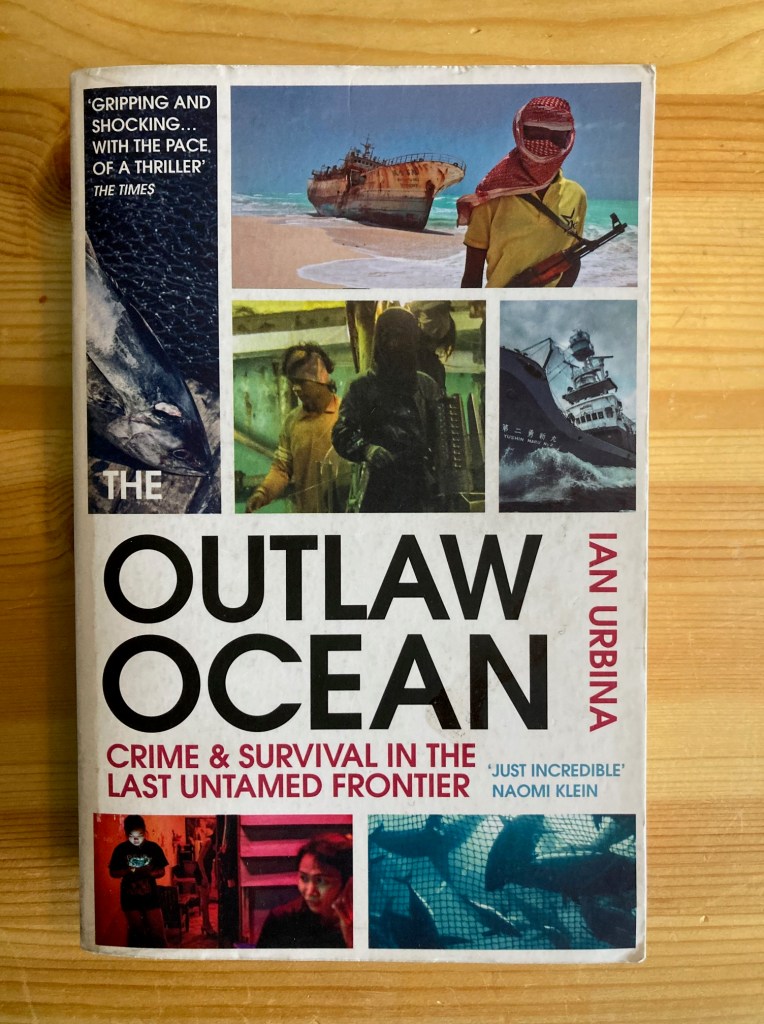
  • The Outlaw Ocean

    Ian Urbina , 2019

    Non-fiction 

    Read: May–June 2025 (re-read from 2021)

    Edition read: Vintage, 2020, 544 pages 

    Investigative journalism 

    Illegal fishing and whaling; under-resourced coastal authorities; vessels not fit for sea; human-rights abuses; abortions provided outside of national jurisdiction; stowaways castaway in the middle of oceans; slavers, slaves and unpaid mariners; repo men for stolen ships; oil explorations and environmental campaigners; waste disposal at sea and territorial disputes: Ian Urbina’s The Outlaw Ocean covers a litany of crimes and otherwise legally unclear practices at sea. 

    This is a highly readable book, combining an exhaustive approach towards small details with careful analyses of the big picture, which, chapter by chapter, rarely turn out to be black and white. Even when presenting a morass of details – sometimes legalistic, sometimes moral, sometimes technical – Urbina knows how to structure a story in a way that makes each of these 14 chapters captivating. 

    The chapters tend to fall into one of two categories: slightly more rote – but still highly engaging – matters, such as Palau trying to police fishing in its huge seas with limited resources, fishing vessels not fit for service sinking when trying to take in huge catches, people being trafficked to work at sea (there are a couple of chapters on this), oil exploration and environmental campaigning against it. The other category could be roughly phrased as ‘the unusual’ – the formation and continuing existence of Sealand, an organisation which provides abortions at sea on a dedicated yacht and the repo men who specialise in retrieving stolen ships. 

    Although it could have started with any of the chapters, Urbina plays it smart and starts with the thriller of Sea Shepherd chasing the illegal fishing vessel The Thunder through the Southern Ocean for nearly four months. Given that Sea Shepherd can be a polarising group, it was more nuanced than I expected, showing how groups of all shades sometimes chose to work with the law and sometimes outside. 

    It’s a chunky book but it’s never slow going; this is a re-read on my part, and should Urbina write any other books, I would read them based on the quality of this one. A bit of sailing on my own part has imparted the knowledge that the more time you spent at sea, the greater the sense that you know even less about it. In a kind of parallel to this more philosophical musing, one of the recurring themes from Urbina’s trips to sea, and present throughout Outlaw Ocean, is how easy it is to hide crimes and questionable behaviour at sea. Here be monsters. 

    Worth reading? Yes. 

    Worth re-reading? Yes. 

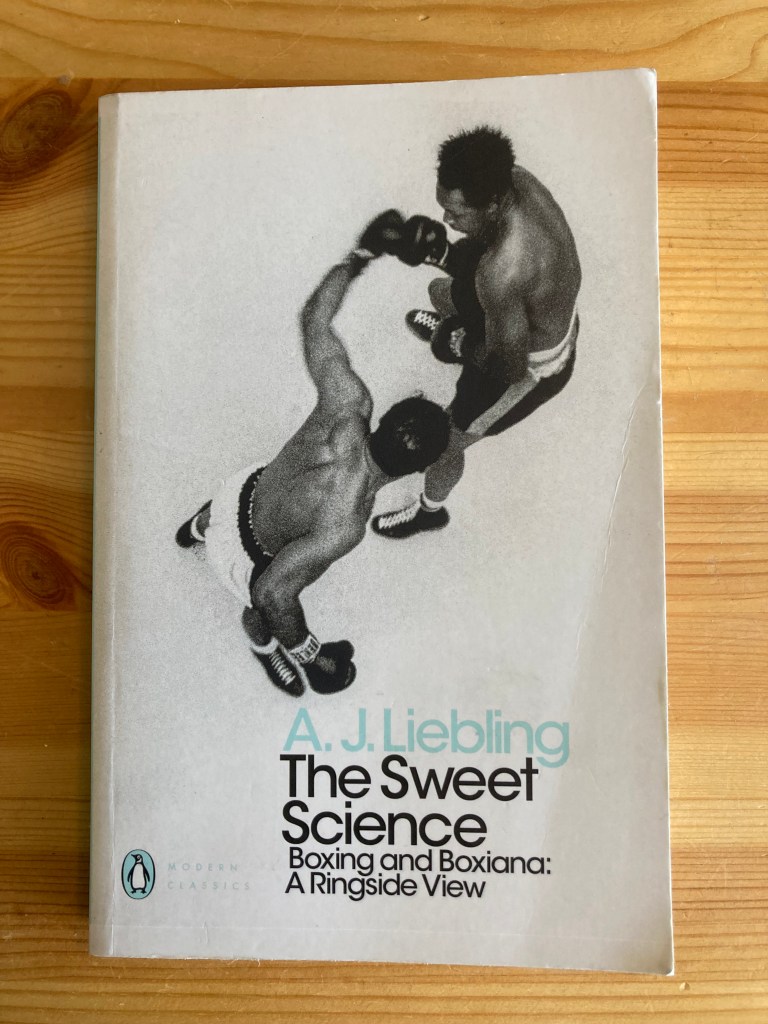
  • The Sweet Science: Boxing and Boxiana: A Ringside View

    AJ Liebling, 1956

    Read: January April 2025 

    Edition read: Penguin Modern Classics 2018, 232 pages

    Non-fiction 

    Liebling was a sports correspondent and this book was originally a series of articles for The New Yorker.

    Liebling covers a multitude of fights spanning – from what I could figure out – 1951 to 1955, over 18 articles (it’s hard to say how many fights exactly, because he refers to historic fights – some of which predate him – on a regular basis). These fights include boxers who are considered to be some of the best ever: Sugar Ray Robinson, Rocky Marciano, Joe Louis, Willie Pep, Sandy Saddler and Joe Walcott.  As such, this is widely considered to be a classic of boxing literature.

    The old-timey, black-and-white quality comes off the page; sometimes this is charming, sometimes it feels dated. Liebling, as befitting a writer for The New Yorker, has an elaborate vocabulary, which at times comes across as archaic (such as the use of ‘milling coves’) or stuffy (just because you can use a French phrase, doesn’t mean that you must*). He does also write with great sarcasm at moments. Largely set in New York, many of the figures read like a Looney Tune character; this is not necessarily a criticism of the writing, but at points some of the dialogue reminded me of Bugs Bunny (‘waidle you read the papers tomorrow’), which does make it hard to take seriously. 

    Nonetheless, The Sweet Science remains a valuable insight into a particular period and captures what Liebling accurately believed to be a vanishing world. By the fourth paragraph of the introduction, he has already raised his contention that TV was killing off boxing for the sake of advertising (hence his repeated references to beer and razor blades at any opportunity). With that said, he regularly goes to what he readily depicts as sold-out fights, such as Rocky Marciano versus Archie Moore – as captured in his many descriptions of crowded New York streets, bars, venues, restaurants and gyms. These pieces also show his obsession with boxing; no dilettante, he goes to sparsely attended fights as well as the sold-out ones (hence the subtitle). 

    Liebling takes on the unenviable task of describing different boxing styles, although he perhaps reads a bit too much into the physique of fighters. As with Norman Mailer’s The Fight, this always extends to covering the exact shade of black fighters’ skin. 

    Of course, Liebling didn’t know that he was writing in what is now considered one of boxing’s golden ages, and often seems somewhat underwhelmed. It is interesting that Liebling denounces aspects of this era.  

    Ultimately, its dated nature made it hard to read at points. If you stick with it, it is an interesting snapshot into boxing and where it sat within society. In this sense, because of these flaws, it is comparable to Mailer’s The Fight

    Worth reading? Yes, although it is dated. 

    Worth re-reading? No. 

    * Besides boxing, apparently Liebling loved eating and writing about French food. An improbable pairing.