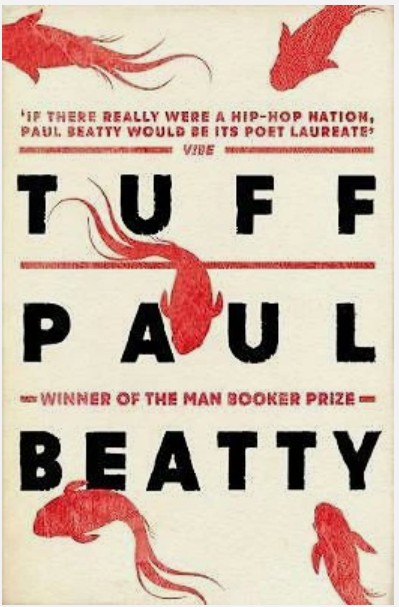
Winston ‘Tuffy’ Foshay and his gang want to make money over the summer. With this end in mind, Tuffy decides to run for office – or, this is the book as the blurb would have it. This high-office caper is actually confined to the last third of the book, rather than actually playing a prominent part, and seems as unfocused as the other two-thirds of the book.
This lack of focus is indicative of the book as a whole, with the plot seeming like a distraction from Tuffy’s misadventures on the streets, Beatty’s rapid-fire satire and the cultural commentary. What the latter is actually trying to express is unclear, even with a second read. Based on his other, more recent books, Beatty does seem like he has a lot to say about the exclusionary nature of American politics,* but the lack of focus makes it unclear whether this is even the point of the book. Tuffy and his gang have moments of insight, but overall run a nihilistic course and, being ambivalent about nearly everything except for money and weed, it’s hard to invest in them as characters either. (Tuffy’s other interest – film – seems a shade too incongruous.) Maybe that’s the point, that the characters have no interest in belonging, akin to a modern day The Outsider, but if there are no stakes it’s hard to care as a reader either.
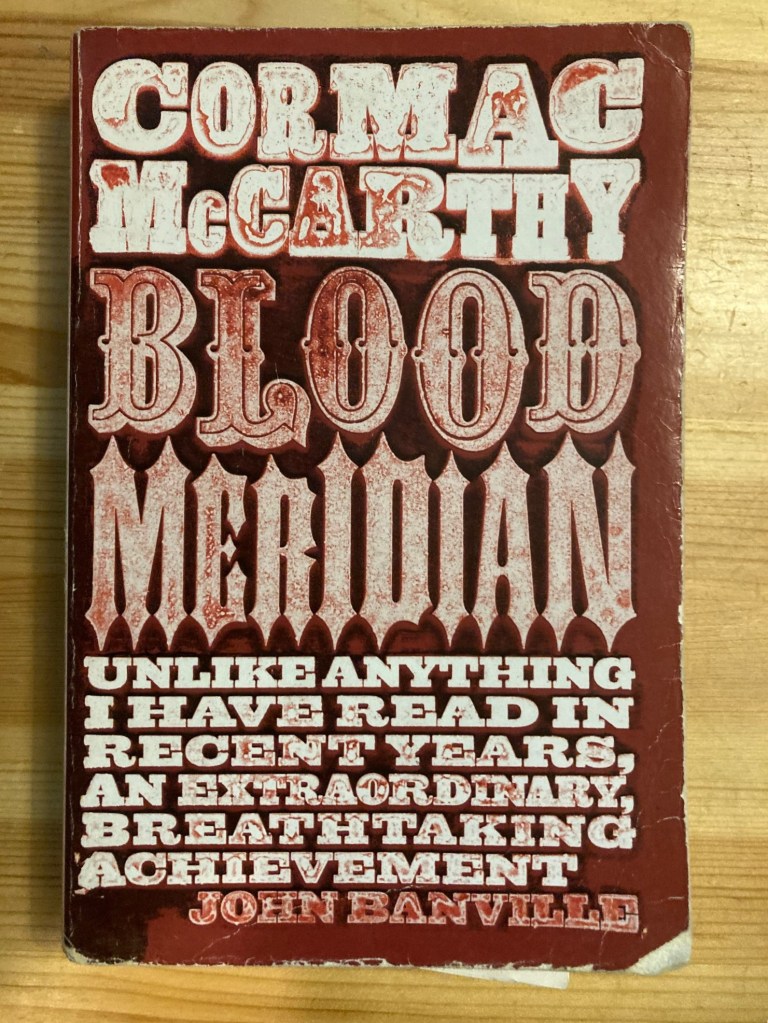
The point of entry to this notorious book is that it is a Western, albeit, one closer to literary than genre fiction, with the primary theme being war, literal and spiritual, everlasting with man as its eternal maker. The scale is grandiose and the tone is Biblical. Considered to be one of the Great American Novels (comparisons to Faulkner, Melville, as well as Shakespeare, abound in the attendant literary analysis),* it’s a bracingly violent read.
The Mexican–American War, here, is presented as humanity’s nature writ large. Drawn from the diary of an American who signed up with the scalp-hunting Glanton Gang during said war,** McCarthy uses this (relatively) modern context to divine the nature of our species. The world in this book – which at times is quite distinctly the US–Mexican borderlands and at others could be neolithic – is the result. And what a thoroughly pessimistic exploration of human nature it is.
More plot- than character-driven, our protagonist, who is only ever named as ‘the kid’, is – as the lack of a name suggests – a figure with little expressed individuality or motivation except for a natural aptitude for violence. Born into a world lacking sentiment, his origin story is that he just wanders off from his home in Tennessee one day and never returns. From here, following an incompetent filibuster*** foray into Mexico made under the purview of Manifest Destiny (although throughout the novel, white men, Mexicans and Native Americans mete out violence with equally vicious proficiency), he joins the Glanton gang. Captain Glanton, being the sort of person you would move away from on public transport or in the pub, has been hired by the Mexican authorities to kill Apache. In the pursuit of money and steeped in the prosecution of colonialism, the gang soon devolve from regional assignments into killing anyone that they can: all scalps (referred to as a ‘receipt’ at one point) look the same by the time they are cashed in.
With that said, the kid and Glanton are in some ways a sideshow to what come to be the two main characters: the land and the Judge. Judge Holden is a driver of philosophical content, holding forth on the order of the universe and the nature of man frequently and extensively (a snippet: ‘It makes no difference what men think of war, said the judge. War endures. As well ask men what they think of stone.’) Abnormally big and completely hairless, he quickly comes to manifest as a supernatural being.
As for the land, the kid and the gang are outside nearly all of the time (brawling in tavernas is a recurring exception to this) traversing vistas colossal in scope, with the size of the open spaces often calling up references to other dimensions and worlds (‘The horses trudged sullenly the alien ground and the round earth rolled beneath them silently milling the greater void wherein they were contained’). The kid and the gang inhabit the liminal, with lots of descriptions of dawn and dusk and of being in places so remote and uninhabited (place names are rarely given) that they rightly seem like they should not exist in our world. It actually reached the point where it made me think of H.P. Lovecraft’s Weird Horror. This is coupled with frequent references to astronomy and the stars, but more in the sense of ‘you are alone in the universe’ rather than ‘isn’t this nice’. This is paired with descriptions of the wilderness so rich that there were times reading this where, minus the murder/scalping/raping/torture/freezing/dehydration/exposure/starving/theft/racism/getting shot, I wanted to be there, riding a horse, wearing a hat, being stoic. However, this is no bucolic, eco-primitivist treatise – man may be the one waging eternal war, but nature is a close second via sheer inhospitality. The various desert landscapes tend to reach the point of reading like hell: hot, empty (of nice things) and full (of the dead).
For those unaware, McCarthy has an idiosyncratic writing style, eschewing most punctuation and using what Wikipedia calls ‘polysyndeton’ (but which I think you and I can call ‘long sentences with no commas’). It is perhaps in Blood Meridian that McCarthy best encapsulates his grandiose, prophetic style, with archaic nomenclature abounding (you will need to bring your old-timey dictionary), somehow simultaneously terse and poetic, extravagant and as laconic as his characters. There is an embarrassment of riches in fantastic writing, but the ‘legions of horribles’ passage is a great example:
A legion of horribles, hundreds in number, half naked or clad in costumes attic or biblical or wardrobed out of a fevered dream with the skins of animals and silk finery and pieces of uniform still tracked with the blood of prior owners, coats of slain dragoons, frogged and braided cavalry jackets, one in a stovepipe hat and a bloodstained weddingveil and some in headgear of cranefeathers or rawhide helmets that bore the horns of bull or buffalo and one in a pigeontailed coat worn backwards and otherwise naked and one in the armor of a Spanish conquistador, the breastplate and pauldrons deeply dented with old blows or mace or sabre done in another country by men whose very bones were dust and many with their braids spliced up with the hair of other beasts until they trailed upon the ground and their horse’s ears and tails worked with bits of brightly colored cloth and one whose horse’s whole head was painted crimson red and all the horsemen’s faces gaudy and grotesque with daubings like a company of mounted clowns, death hilarious, all howling in a barbarous tongue and riding down upon them like a horse from a hell more horrible yet than the brimstone land of christian reckoning, screeching and yammering and clothed in smoke like those vaporous beings in regions beyond right knowing where the eye wanders and the lip jerks and drools.
Oh my god, said the sergeant.
Oh my god, said the book reviewer.
With this all said, this novel is certainly not for everyone. Criticism tends to focus on the lack of exposition and insight into any character (except for the judge), although my take on this is that this creates the very much intended effect that mankind is unknowable. This could also be said about any McCarthy novel, so you might already know whether you like this or not. The other common critique is that the violence is gratuitous. Admittedly, around page 200 it starts to feel like one long bender, akin to the anti-narrative of Suttree, but I felt this added to the effect of violence becoming its own purpose. The few female characters are also very minor, although, again, if you’ve read any other McCarthy books, you knew this already.**** My biggest criticism is that by a certain point the intensity of the descriptions becomes hard to process, although this a case of having a good problem.
As stated, where we come from, how we are and where we are going is here attested as thoroughly pessimistic. In McCarthy’s ouvre, if No Country for Old Men is the present and The Road is the future, then Blood Meridian is the past. The Kid’s refusal of the Judge at the end does suggests a rebuttal of determinism, although at the close it is a question without an answer.
Worth reading? Yes.
Worth re-reading? Yes.
‘The ultimate trade awaiting its ultimate practitioner’
*A body which includes my dissertation.
**Samuel Chamberlain’s My Confession: Recollections of a Rogue.
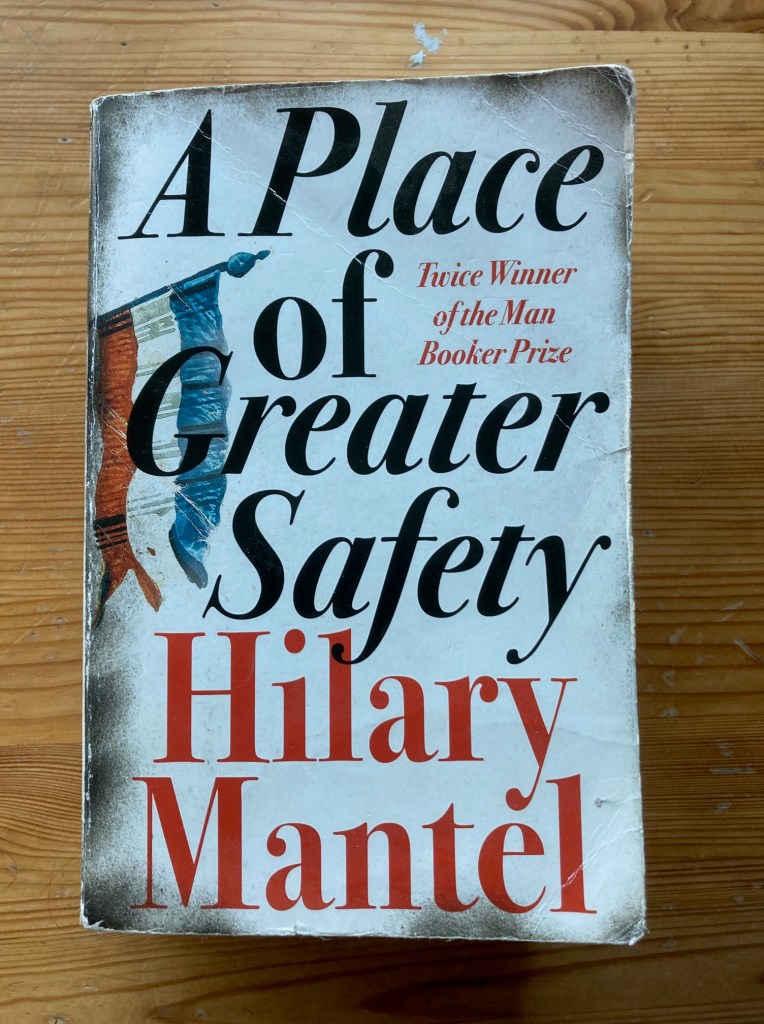
As with Mantel’s Wolf Hall trilogy, this hefty historical epic* covers the life and times of some great men of history, this time across the Channel and delving into a social rather than a theological upheaval: the French Revolution.
Told through the carouselling perspectives of three figures central to the revolution (plus a cohort of secondary characters), Georges D’Anton (later just the more streetwise ‘Danton’), Maximilien Robespierre and Camille Desmoulins, the scope is broad, starting with their childhoods in the French countryside, through to their schooldays, their respective moves to Paris, their careers as lawyers and their participation in the revolution. Besides allowing considerable breathing space for characterisation, this scope also effectively portrays how the revolution was as much a process as an event, which ultimately took place over some ten years.
In addition to this ambitious scope, Mantel also writes in great detail. As well as insights into the psyche of each character (as with Wolf Hall’s Cromwell, this is the element of fiction that accompanies the history of the meticulously researched events), it is ornately written, moving not just day by day but idea by idea, very much positing the idea that the revolution took place first in drops and then in rivers (of blood), with the factional struggles that came to characterise the revolutionary movement presented in ample detail. Besides the numerous factors, driving ideas and events of the French Revolution being funnelled through the perspectives of the three main characters, as well as the many, many secondary ones, the tense shifts a lot. At least some of this myriad of secondary characters was surplus to requirement, meaning that I had to flick back to the dramatis personae on a regular basis; more time spent with fewer characters would have resulted in a more focused narrative.
A Place of Greater Safety is partially a history lesson, but its subjectivity and intricate, ultra-focused (and fragmented) perspectives means that it would help to have a knowledge of the French Revolution before reading it.** This provides a segue back to my comment about ‘great men of history’: the novel, with all of its shifting perspectives and subjectivity, makes allowance for the counter-argument that broader social factors were just as responsible for the revolution as were the actions of any one particular figure. Here, events are sometimes seen as the drivers of these men, and sometimes vice versa.
How effective a comment this is upon trying to write a history upon a multifaceted event, and the element of confusion that must accompany being in the midst of a revolution, is up to the patience of the reader. There is a lot between the lines and keeping up this level of active reading for 770 pages is hard. It’s certainly an original approach and Mantel has a distinctive way of writing and you’re either going to enjoy its idiosyncrasies or run out of patience for it.
Worth reading? Yes, although I would start with a shorter Mantel novel to get an idea if you’re going to like her style of writing.
Worth re-reading? If you can handle it, yes. A second read would help a lot with comprehension.
*In what can only be called a daring effort, this, apparently, was the first novel that Mantel ever wrote (although not had published).
** I retroactively did so via The Rest is History podcast.
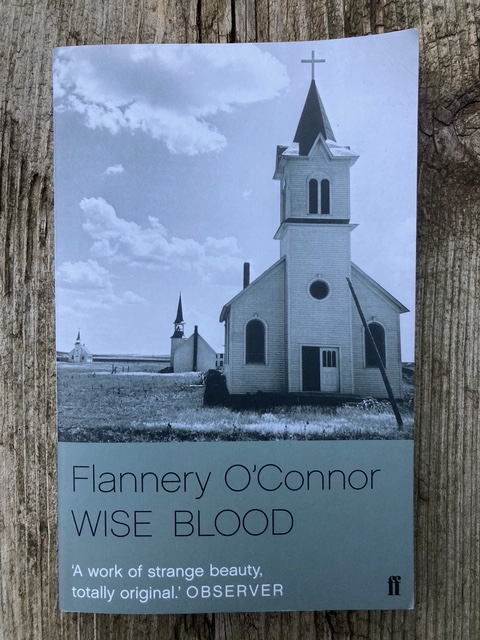
The demobbed Hazel Motes returns to the Deep South to set up his own church, ‘The Church Without Christ’ circa late 1940s, relocating to the big (fictional) city of Taulkinham from his now-abandoned rural hometown after finding that his family has all died or moved away.
Set on becoming a preacher until conscripted at 18, Mote set himself on becoming an atheist – or anti-religion – preacher, seemingly out of a sense of nihilism. However, it’s not the ordeal of war, and his resulting injury, cause this crisis of faith; he’s just told that he doesn’t have a soul by a fellow GI.
There is a certain class of purportedly ‘classic’ novels that I am not struck by, and the common factor behind my lack of comprehension seems to be, why are these people doing these things?
This was my first problem with Wise Blood; the protagonist is told that he doesn’t have a soul and he switches from knowing ‘by the time he was twelve years old that he was going to be a preacher’ to wanting to ‘be converted to nothing instead of to evil’.
It was this inscrutable nihilism which reminded me of The Outsider. I generally go in for Southern Gothics (William Gay, Harry Crews and Cormac McCarthy are favourites of mine), but I was underwhelmed in a way that reminded me of Albert Camus’s The Outsider, where the weight of expectations brought too much baggage. That’s not to say Wise Blood didn’t have both good and great scenes (in particular, the ending), just that there were elements and sections which didn’t land, such as when Enoch Emery, whose role as a character seems to be a metonym for the (religious) masses, finishes his part in the story out in the woods dressed up as an ape. Given that it is he who is of the ‘wise blood’, following it to make his decisions, is this just a critique of idolatry?
It’s certainly misanthropic, with few characters coming out of this looking good; the blind preacher Asa Hawkes turns out to be a fraud and as soon as Motes sets up his religion, the conman Hoover Shoats duplicates it in order to make money. Emery certainly introduces an element of the grotesque – dressing as an ape, stealing a preserved corpse – as well as comedy (such as his mispronunciation of ‘museum’).
Another element that I couldn’t work out was Asa Hawkes’s daughter, Sabbath Lily; I think she is supposed to be predatory, but Motes never seems particularly victimised by her. What was interesting was how it ended with Motes’ landlady trying to find meaning in his – now blind – eyes, at the moment of his death, searching hard and finding nothing – or maybe just whatever she wants to find. Overall, however, if this is a parable on organised religion, I’m not sure what the lesson is.
Worth reading? Yes, but I didn’t like it as much as I wanted to.
Worth re-reading? No – with the caveat that it is hard to fully understand on a first read. A short and quick read at 160 pages, I think a second read would bring more out of it.
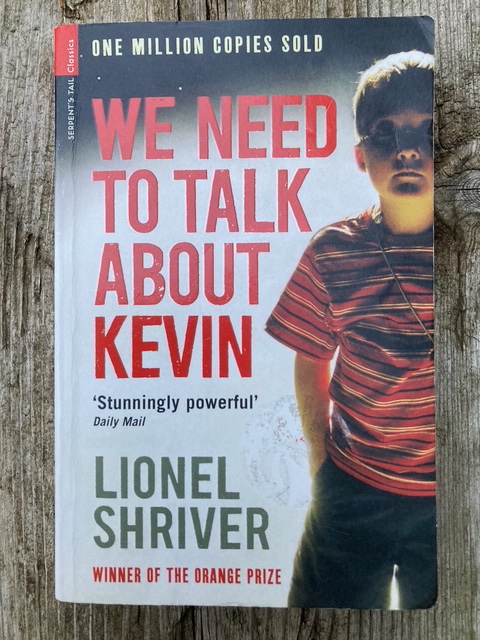
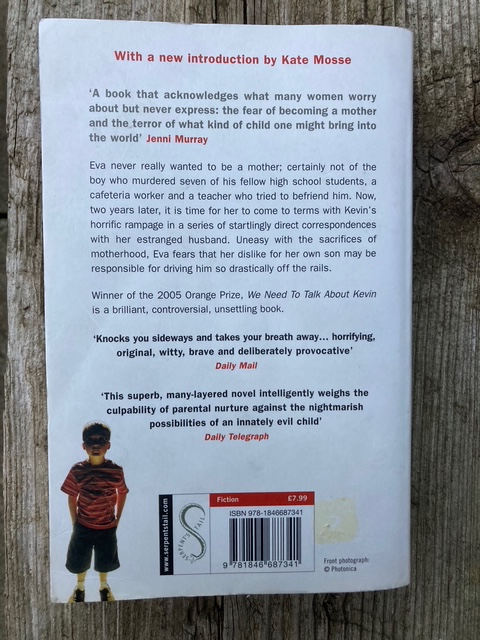
A bracing take on motherhood from the perspective of the mother of a mass shooter.
The prose is intense and clever. I had to read this in short bursts, not just because at points it was uncomfortable (Shriver has created a chilling nemesis in Kevin), but because she writes so articulately and incisively that therein lays a tension between reading about Kevin’s next atrocity (he is adept with cruelty and violence) and soaking up the details of his mother’s life and perspective (a good problem to have as a reader – I can imagine creative-writing courses loving this).
The novel takes an epistolary form, the protagonist Eva Katchadourian writing to her estranged husband after what she refers to as ‘Thursday’ to finally express many an uncomfortable truth. That she refers to the mass murder perpetrated by her son as ‘Thursday’ suggests she is more OK with some of these uncomfortable truths than others; enter the unreliable narrator.
This narrator is clearly highly intelligent and slightly superior, with the narrative perspective completely hers – neither her husband nor Kevin get a word in directly. The epistolary form is an astute choice of form, allowing for this subjectivity, a credible intimacy and a plot twist. A more predictable choice would have been letters to the titular inmate. Here, instead, it is how a husband and wife are left to communicate after a ruinous event.
Kevin is an intriguing villain and the defining question of the book shapes up to be, why did he do it – what was wrong with him? And, as secondary questions, what if the only thing that someone likes is hurting others, and (don’t forgot that bit about the unreliable narrator?) what if, whatever you do, the child you raise is not a nice person?
Although his character is written as being perennially pitted against his mother, the answers to these questions are ultimately left to our interpretation. This lack of a clear ‘why’ makes Kevin’s villainy that more compelling.
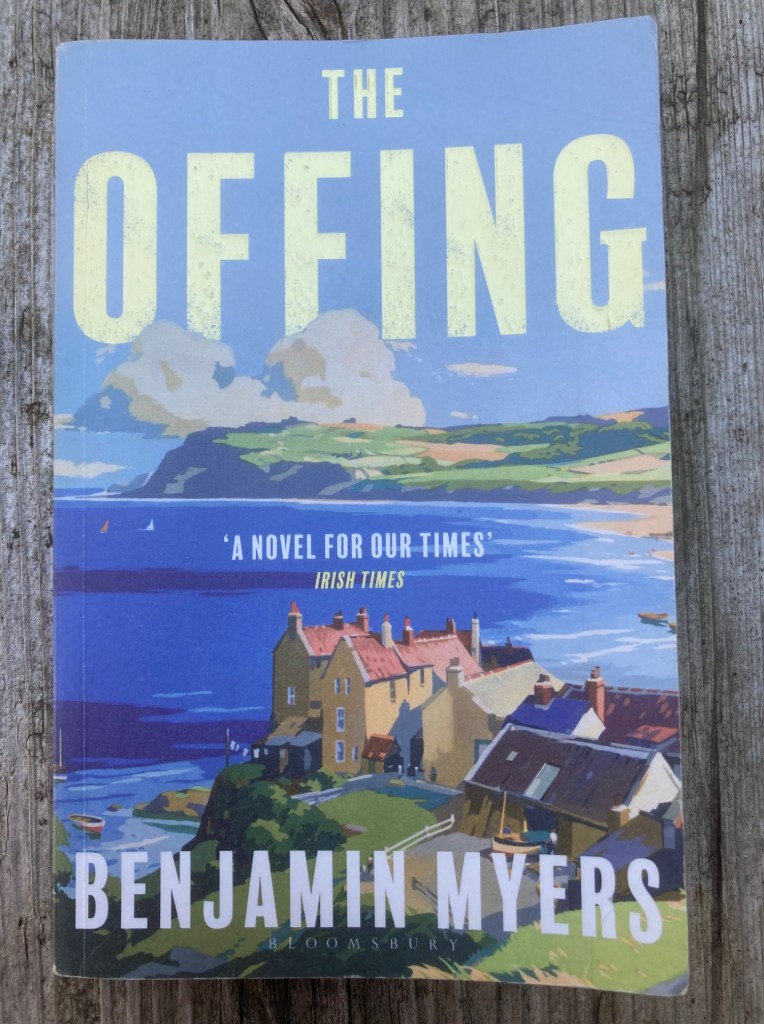
The plotline of The Offing is slightly more pedestrian than Myer’s more typical ‘Northern Gothic’ novels; working-class boy (Robert) from post-WW2 English mining town meets eccentric upper-class woman (Dulcie), who has retreated from society due to long-lost love, where they experience mild culture clash and she exposes him to the better things in life.
Told in the first person, the story takes an analeptic form, which somewhat explains the rich vocabulary, but for a narrator introduced as painfully ancient, he has a remarkable memory for details. Read this deliberately rich vocabulary with patience and the five senses get a workout; the colours, smells, feelings, sights and sounds of nature all feature regularly and prominently and there are some great turns of phrase (‘The ashen sea roared in the distance like a football stadium witnessing an extra-time injustice’). However, the plentitude of what I came to feel were overly frequent and verbose descriptions of nature did get monotonous.
There are two main sections – Robert by himself, which if anything is slightly more interesting, capturing the landscape(s) of northern England as he walks across it, and then when he encounters Dulcie. There is a subplot about poetry, which seems slightly meta – is Myers talking about how Northern working-class people aren’t supposed to like poetry, but if you take them out the pits, they do?
If there had been something else happen, it could have had a more compelling sense of drive; unfortunately, besides the over-the-top descriptions, the stakes just feel a bit low.
Worth reading? No, even though I came into this wanting to like it – Myers has written some brilliant books.
Worth re-reading? No. Myer’s other books – The Gallows Pole and These Darkening Days – however, are well worth a read.
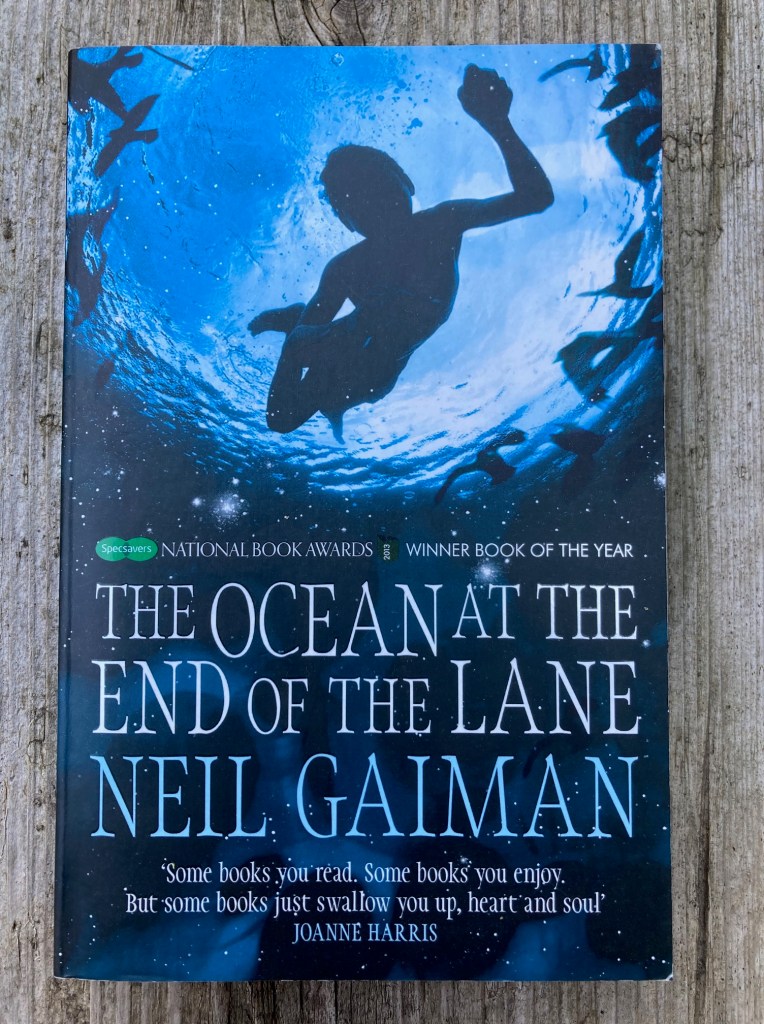
I saw a National Theatre production of this in November 2023 and did my best to follow the plot, but at a certain point it just took an absolute left turn to comprehension and I had no idea what was going on. Let’s see if I can do any better with the book.
It starts with a funeral, which leads the (unnamed) narrator to revisit his childhood home, and the pond, or the ‘ocean’, at the end of the lane. In turn, he remembers a childhood memory – the story at hand – for the first time. As such, it is told in the form of analepsis. Here, death is a gateway.
Much like Gaiman’s Neverwhere, the story takes place in a universe that could be ours, until it very much doesn’t, with the introduction of a different – perhaps parallel – universe. I spent a while considering whether this was surrealism or fantasy; despite the title, I think it’s the latter. The element of surrealism that is a lack of understanding of the rules of the universe, and the suspension of the normal rules – those of reality – evolves into fantasy as the sense of normalcy completely gives way to another, strange and unfamiliar, world.
It is written from a child’s perspective, quickly deploying the trope of a child dealing with gaps in their knowledge and understanding, particularly of adult themes, with the early suicide of the opal miner. The narrator, who often articulates his feelings of a lack of agency, is convincingly passive as a child. I wondered what the significance of the opal miner was for a bit: he is gone almost as soon as he appears. Ultimately, besides this character providing a dark example of something beyond the child narrator’s understanding, as well as driving the plot forward, I read it as a note on the letdowns of adulthood. As this suggests, although it could be read by older children or young adults, it works on two levels, and in many ways this is quite a dark book; besides looking at loss (such as when Lettie is hurt protecting the narrator and has to ‘rest’ for what turns out to be a lifetime) it draws upon what adults say/look like versus what they actually do/how they act, the protagonist’s father’s affair with Ursula being an example.
As this early development suggests, the plot whips along (I read this over a long weekend), although the logic behind ‘why is this happening?’ is not always apparent and re-reading a couple of pages proved necessary (this made me feel better for not having been able to follow the play). Gaiman is inventive, creating his own tropes, such as the suicide of the miner summoning the spirit/Ursula to distribute money. Although he has written a compelling fantasy, this book could be read on a purely symbolic level for memory and loss of childhood, the ocean being something to return to and submerge in but never cross.
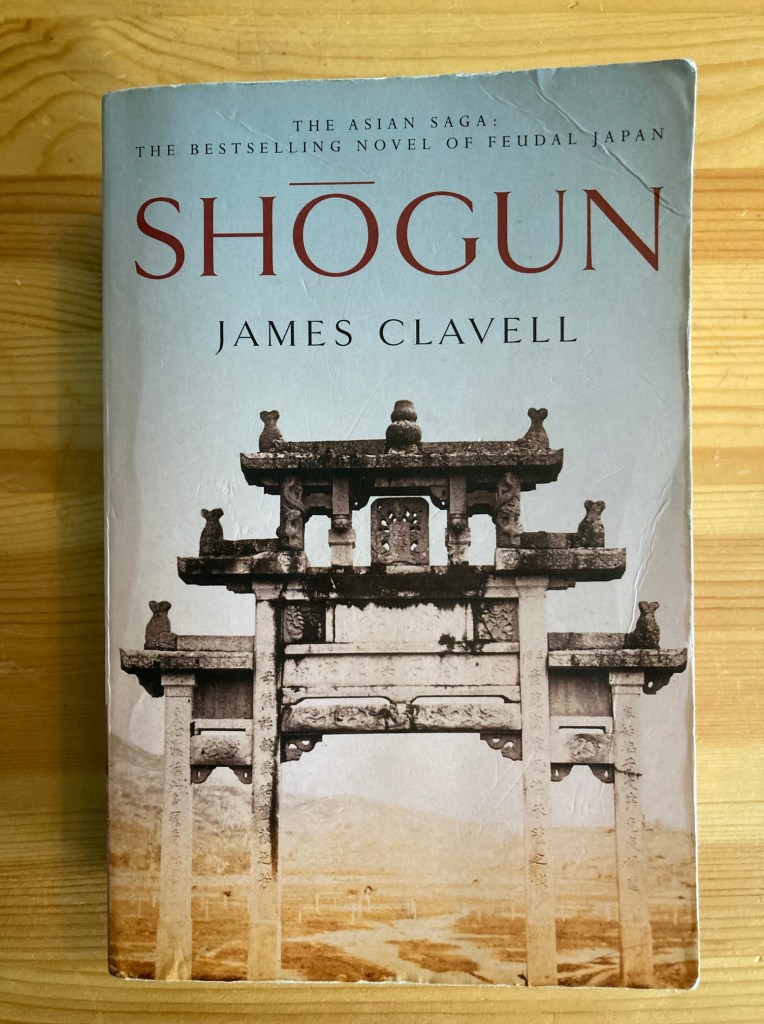
In Down Under, Men at Work sing their way through a couple of culture clashes. These all turn out to be relatively benign; cars break down on hippie trails, people make Vegemite* sandwiches, beer flows and people chunder. There is an attempted drug deal, but the proud Australian tells the Bombayite that he comes from the land of plenty, and that Aussie rules is the best sport, so clear off mate.** In Shōgun, the learning curve is a bit steeper; the (Protestant) Elizabethan protagonist gets shipwrecked in ‘the Japans’, the only people who can translate to and from Japanese are pesky Catholic missionaries, people are either beheaded or expected to commit ritual suicide (‘seppuku’) for slight infractions, eating raw fish is a yes and daily baths are expected.
The Erasmus, a trading ship of Elizabethan-era Dutchmen and an Englishman (John Blackthorne, the navigator and our protagonist), arrives at a key moment in the history of feudal Japan; the Taiko (Japan’s main man) has died, leaving an infant son and five lord regents to rule for him as a council until he comes of age. These five regents all want to kill each other off, but manners dictate that no one can even openly show that they are mildly offended by obvious stingers, so they resort to a lot of scheming instead. Talking of scheming, the Portuguese Jesuits are already there, facilitating their monopoly of trade between Japan and China, as well as working on The Treaty of Tordesillas. They are not pleased about a bunch (in fact, the very first bunch) of Protestants appearing.
As such, Shōgun covers the build-up to war and the requisite manoeuvring, moving between the perspective of various characters, including Blackthorne, to do its world building. Although based on a true story, from a post-colonial perspective, that a story about feudal Japan had to involve an Englishman seems a bit questionable, although Clavell’s approach does make for an interesting premise. (This is also not to mention that feudal Japan did a fair bit of colonising of its own.) Upon first consideration, it just seems improbable that Blackthorne is the protagonist (and also gets the main lady.) However, he is very much used as an oft-unwitting chesspiece in a game of political chess; it ends with an soliloquy from Toranaga (who, indisputably, grows into being the Shōgun of this story), rather than from Blackthorne, wherein it is revealed that the latter’s plans of sailing off into the sunset back home to England may not quite work out. Emphasising this point, the rest of the crew of The Erasmus quickly become minor characters; their main purpose is to show the tension between what Blackthorne was and what he becomes. Fortunately, Clavell doesn’t try to place Blackthorne on a typical hero’s path and make him become a great warrior who comes to surpass his (many) enemies in combat; instead, Blackthorne quickly comes to understand that he is no match for any samurai.
Shōgun packs a lot of plot into its 1000+ pages, and my initial assumption that there was going to be a swordfight on every page was incorrect – it actually ends before the major warfaring begins, being very much about the preceding manoeuvering. The flipside to this is that what with the politics, plotting, spying and power struggles, the plot can be hard to keep up with and the sections focused on social propriety make for slower reading.
When it comes to show versus tell, it leans towards tell, wherein a lot of historical information about Japan, and the personal stories of characters, are set up, generally via free direct discourse. It is a nice touch that Toranaga disappears at times, not just from the events of the book but also from the narrative, with Clavell resisting the urge to jump into his perspective and instead let the reader get a taste of the other characters’ confusion.
Worth reading? Yes – it’s a long read, but stick with it.
Worth re-reading? Yes, and given the complexity of the plot, would be a fruitful read with the added comprehension that a second read invariably brings. However, to compare apples to orangutans, the 2024 TV series is better than the book, so if you don’t have time, do that.
Death is part of our air and sea and earth. You should know, Anjin-san, in this Land of Tears, death is our heritage.
Edition read: Dead Ink Books, April – May 2025, 446 pages
Fiction – folk horror. Won a Nero Award for Best Fiction.
*Spoilers*
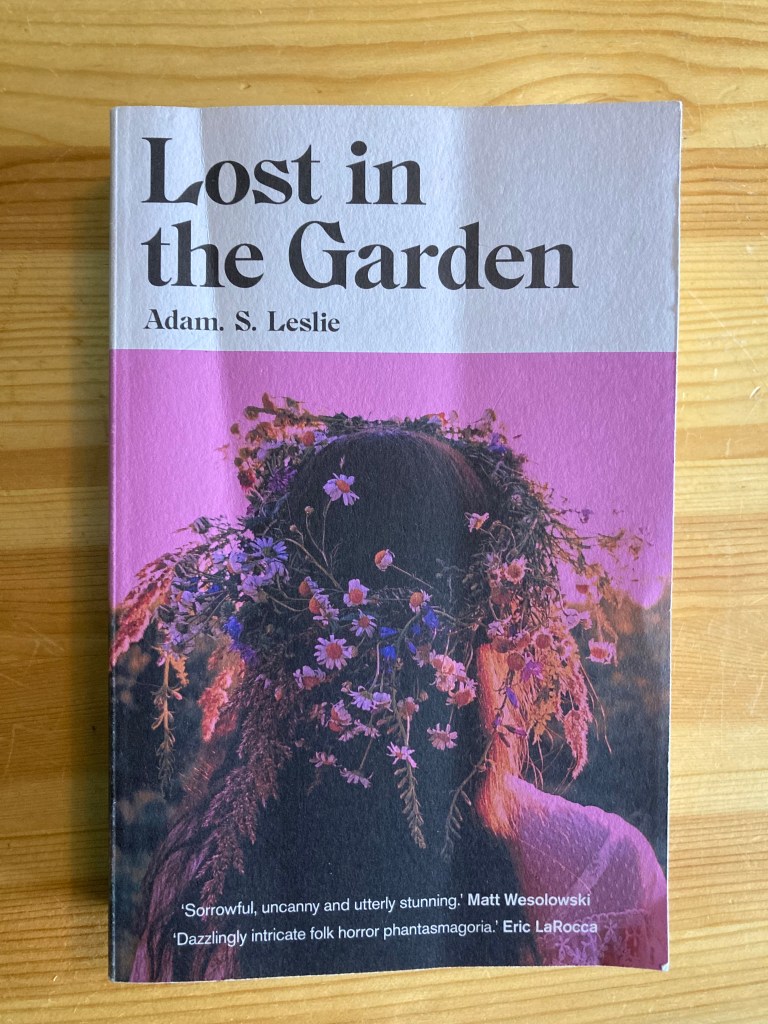
Three young women live in personal stases of varying degrees in a village in northern England where the dead meander and a six-year summer shows no sign of abating. This is the first interesting point (besides the dead roaming about and everyone seemingly just kind of…meh about it): a folk horror set in a warm, sunny, endless summer, inviting at least just a little bit of comparison to that most famous piece of work in the folk-horror oeuvre, The Wicker Man (we’ll come back to that later).
The title refers to the unnaturally ever-abundant vegetation created by the endless summer that these three female protagonists – Heather, Rachel and Antonia – inhabit. In this world, Leslie has a different take upon zombies; they are generally harmless until underestimated, at which point they close in, gang up and kill people with hard objects. No eating reported.
The descriptions of this eternal summer are rich without being saccharine (‘Very occasionally it was a dry heat, a soily heat smelling of bug carcasses and stones, but usually the air sweated as much as the people’), and rural scenes abound, with the action sticking to the countryside and villages.* In this garden, there are no old(er) people and no authority figures, although there does exist the accepted aphorism, ‘Don’t go to Almanby’. No one seems to know why; just going there is taboo. Plotwise, Heather is trying to find her boyfriend, Steven, who disappeared to – of course – Almanby around six months earlier, although a difficulty in keeping track of time is a recurring theme, getting pushed to extremes later on in the book, with one particularly atemporal slippage of reality.
Rachel needs to deliver a package – the contents of which she keeps a secret from Antonia and Heather – again, to Almanby! This is the start of the story proper. Roadtrip!
I started off quickly, then slowed down, finding the irreverence of Rachel and Heather a bit grating, then got back into it as the narrative drive picked up. Rachel clearly has something to hide, but we aren’t just let in on what. She receives mysterious, nonsensical transmissions via a portable radio. The unknowns, including an ever-elusive ice cream van, build up the mystery, driving the story via intrigue, and although the unanswered questions ultimately add to the feeling of a bad dream, these don’t all resolve as clearly as possible. For example, it’s implied that Antonia is a murderer, which doesn’t go anywhere, nor does it really seem to inform her character. Her love interest in (but seemingly never with) Heather also just fizzles away at the end, without any requisite epiphany.
Although it moves between the perspectives of each of the three main characters, it can sometimes be hard to remember the ‘whys’ in this novel; why did David hold them up? He is also being manipulated by Steven? What’s the deal with Rachel – is she addicted to something? At one point I wondered if Almanby was an analogy for addiction (‘it was the best feeling she’d ever experienced, and she never wanted it to stop, even as she knew it soon would’), but this isn’t developed and her motivation remains unclear.
Jumping back to that use of ‘folk horror’ and The Wicker Man – when they arrive in Almanby is when it really becomes clear that the normal rules of this universe have fallen aside and that something is off, although Leslie does a good job of maintaining the build-up and making it hard to place what. As suggested, a lot remains unexplained, which at times really adds to hazy feel, such as the farm building which turns into a looping maze, but this doesn’t deliver on all fronts. Is Heather struck by lightning towards the end? Is Steven trying to destroy Almanby? The theme of sacrifice also comes up, but not as a heavy-handed copy and paste of The Wicker Man. So, although the composition falls apart towards the end, the ending is still delivered with considerable interest, and does leave a satisfying chill.
Worth reading? Yes.
Worth re-reading? Yes, although the strength of the writing carries the plot a bit.
*These were pleasingly effective compared to another recent read, Benjamin Myer’s The Offing.
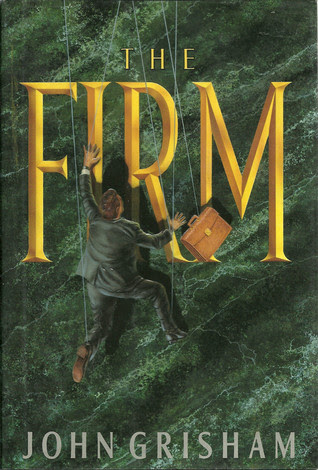
Besides a nice view, slightly wonky drawers and Cornwall’s slowest TV, my holiday accommodation came with this book. It’s a legal thriller and using tell, don’t show (rather than the reverse), it succeeds in being a page turner. This keeps the pace up, a mark of success for a book about a law firm (and Grisham is not shy about the legal terminology).
Most of the story is told from the perspective of the protagonist Mitch McDeere. It switches to those of other characters to feed the reader information to smash that plotline out. This makes it a bit too easy a read; for example, there would have been more narrative tension if it wasn’t made explicit that McDeere’s house had been bugged.
It also reads as a certain amount of wish fulfilment, with Grisham accentuating the materialistic details; McDeere is a working-class boy (who was also quarterback!) who done good and now wants to drive a car that shows it. His wife, Abby, has great legs. His eventual accomplice, Tammy, has great breasts. The in-laws – who are the wrong type of materialistic – suck. This last point says a bit more than I think Grisham intended to; while masquerading as a takedown of these things – materialism, sexism and racism (on this last point, stereotypes abound), The Firm simultaneously accentuates them.
Returning to the issue of narrative tension, there a couple of things that left me scratching my head. The incriminating photos of McDeere with the prostitute never become of any significance. This would have made the story more dramatic in terms of Mitch’s and Abby’s relationship, but in the final paragraph this whole lapse of character – a moment of reckoning – is just dropped. Why does McDeere’s colleague, Lamar Quin, turn a blind eye when he spots his brother, Ray (ultimately allowing Mitch to incriminate him)? When Avery is killed off, it is reported via dialogue between two other characters, without the intimacy of being taken to the scene being granted. Given how much information The Firm does feed to the reader, it feels odd for this sense of distance to be deployed here. Only two of the five murders of former lawyers are delved into; is it realistic for a firm of brilliant, perceptive, high-flying lawyers to not look into the other three? Tammy also receives little in the way of resolution, although I felt that here, Grisham keeping her at arm’s length, rather than drawing her deeper into the narrative, did work, in that the theme of people cutting the ties that bind and reinventing themselves recurs. Likewise, when the stereotypes are left alone, The Firm does come across as a strong piece of Americana; motels, diners, roads, reinvention and losers abound.
There are a few other things that work better; the death of the third brother, Rusty, in Vietnam, is mentioned, as is Mitch’s and Ray’s mother, but both of these elements are kept peripheral. The closest the latter comes to entering the story is Mitch almost – but not quite – visiting her. This is one of the more interesting, literary aspects of the novel, with this relationship being shown rather than told, and this estrangement never being fully revealed. The end feels rushed, with the last third dropping the ‘legal’ from ‘legal thriller’. Little detail is given about the ultimate fate of the firm and the mob. Mitch gets his ending. Abby doesn’t (or rather, she gets Mitch’s ending and is apparently completely fine with it). They have loads of money, but it seems like they are limited in many other ways (they can never return home; McDeere, the dedicated lawyer, can never practise law again). Arguably this is more realistic and grittier than everything just working out and the hero getting to carry on as he was (the FBI aren’t depicted as angels, and in some ways, McDeere is their victim), but the closing line of ‘Let’s get drunk and make a baby’ reads like a somewhat Victorian idea of a happy ending.
Worth reading? It’s a tempting yes, because it’s a quick, easy read, but ultimately, no.
 The Page Count