Tag: Book Review

  • The 39 Steps

    John Buchan, 1915 

    Read: August 2025

    Edition read: Penguin Classics, 2004, 149 pages  

    Thriller

    *Spoilers* 

    An early thriller novel full of decent chaps and rotten blighters. Whilst reading this I found myself trying to decide on the best semi-archaic synonym for ‘thrilling’, like ‘swashbuckler’, ‘humdinger’ or ‘snortripper’ (I may have invented that one). 

    The protagonist, Richard Hannay, bored with life in London, is framed for murder. Now a man on the run and not so bored, he proves to be a resourceful fellow, getting to try on lots of new disguises at a relentless pace. With a turn of pace, competence and luck which at times verge on the improbable, he MacGyver’s his way up and down the country, even getting to blow himself up and out of a jail cell at one point.   

    Hannay is also a fantastic judge of character and doesn’t mind letting you know. The predominance of rural folk and city bigwigs does result in a fair few flat characters, but the Scottish Highlands, however, are wonderfully described (‘Behind me was the road climbing though a long cleft in the hills, which was the upper glen of some notable river. In front was a fat space of maybe a mile. All pitted with bog-holes and rough with tussocks, and then beyond it the road fell steeply down another glen to a plain whose blue dimness melted into the distance.’) Circling back to the decent chaps and rotten blighters, the latter – what with this being set pre-WW1 and published in 1915 – are of course ruthless Germans, conspiring to bring about war (not to forget an unsolicited rant about Jews). 

    A fun read, the ten chapters set a rapid – although somewhat uniform – pace. 

    Worth reading? Yes. 

    Worth re-reading? No, just as there’s not much in the way of subtext. However, the descriptions of the Highlands are great. 
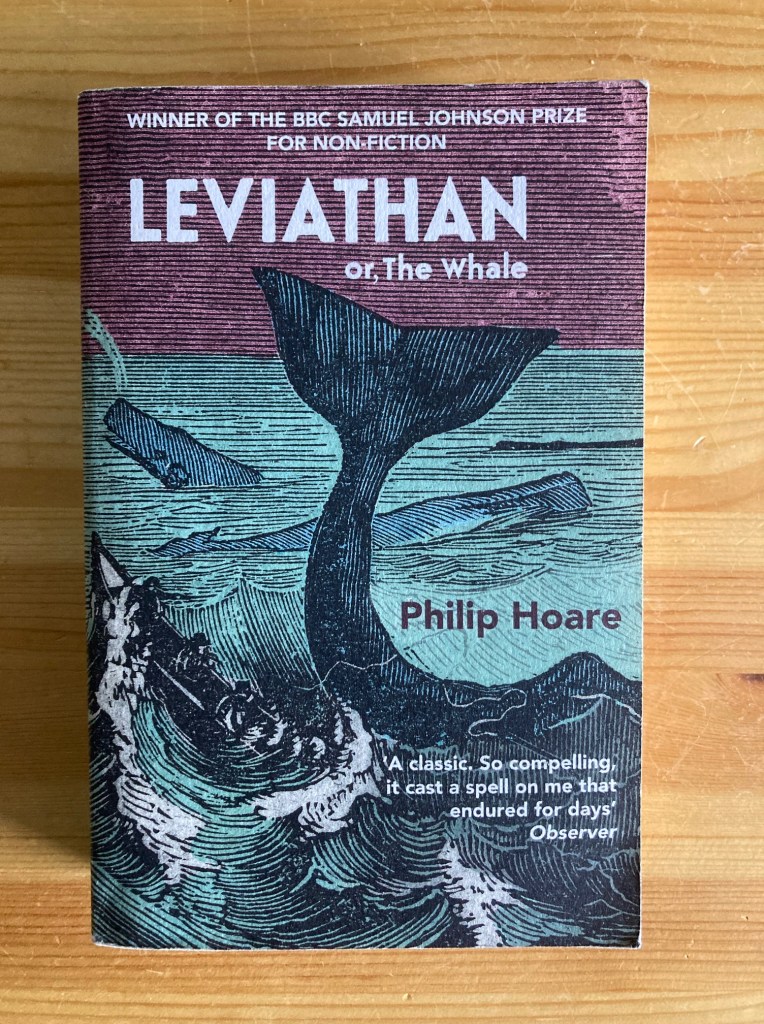
  • Leviathan or, The Whale

    Philip Hoare, 2008 

    Edition read: Fourth Estate, 2009, 421 pages 

    Read: August 2025 

    With a somewhat freeform approach, it is not immediately clear which category Leviathan falls into. At times possessing the discursiveness of a long essay, it reveals itself to be a mix of memoir and history, documenting both the relationship between humanity and whales and the author’s ambivalent perception of the sea. Besides being highly informative on the natural history of whales, the book takes on a confessional tone, with Hoare exploring universal themes such as loss and loneliness. It is poetic without losing grip of the subject at hand and in its broadness draws upon that lodestone of cetacean-related literature, Moby Dick*, as a cultural and literary reference point. As a book upon a naturalist interest projected outwards, it fits alongside titles like The Old Ways and H is for Hawk. As a book of obsession, it will certainly interest you in whales. 

    Worth reading? Yes 

    Worth re-reading? Yes 

    *I wouldn’t say a review is forthcoming per se, but I do intend to reread it at some point, with a particular focus on the chapter that is 100% about chum. 

  • Black Spartacus: The Epic Life of Toussaint Louverture

    Sudhir Hazareesingh, 2020

    Read: 2020–24

    Edition read: Allen Lane, 2021, 464 pages

    Non-fiction, history

    Take #2 (or #3?)

    Toussaint Louverture (or, if you like, the slightly more dashing Toussaint LOuverture) led the only successful slave revolution since, well, the other Spartacus, freeing Haiti from French slavery. Nonetheless, he seems to have remained a generally unknown figure until this book came out in 2020 to much acclaim (I found out about him via a Swans song, which doesn’t exactly scream ‘well known’ either).

    I found this a hard read. There is a narrative, but it feels more like a loose structuring tool/device for details about Louverture and the ideas surrounding him, rather than a narrative-driven piece of history. 

    Although I appreciate that ideas and events can drive history as much, if not more so, than people, it ends up feeling academic.

    Louverture and the Haitian slave uprising is one hell of a story – it’s just how it is told. I am still interested in Louverture and the Haitian Revolution, but think I will try a different book next time. I even tried to read it via a set number of pages per day, but, ultimately…

    …DNF

    Worth reading: No

    Worth re-reading? No

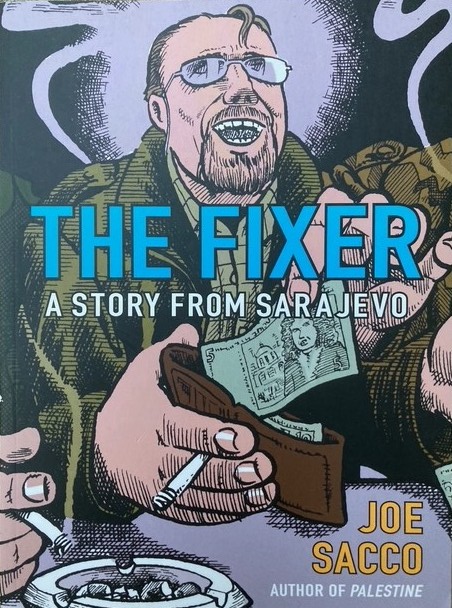
  • The Fixer

    Joe Sacco, 2004 

    Read: June 2025 (bought in Edinburgh) 

    Edition read: Jonathan Cape, 2004, 106 pages 

    Graphic Novel, black and white 

    *Spoilers* 

    The Fixer starts with Sacco’s return to Bosnia – specifically, Sarajevo – in 2001, having been there before during 1995 and 1996,* to continue his – now retrospective – reporting on the Bosnian War. 

    A major theme, constant across Sacco’s oeuvre, is conflicting narratives. Here, the narrative that receives (or demands?) the most (although not entirely uncritical) attention is that of the titular ‘fixer’, Neven. Sacco’s story morphs from that of the Bosnian War to that of Neven. He is a metonym for the whole of the Balkan conflict, as Sacco astutely identifies in his telling of this story, and his understanding of the value of Neven to him as a journalist. A Serb who fought on the side of the Bosnians, Neven is multi-faceted and contradictory. He makes his post-war living by helping journalists, with Sacco constantly unsure whether he is getting a deal or being fleeced, or if Neven is somehow a victim. 

    Sacco has a good sense of story and pace for what could be a morass of details and isn’t afraid to show himself as occasionally clueless and sweating over his own perceived amorality. His black and white crosshatching is as detailed as ever, eschewing exaggerated features in favour of a more restrained, serious style. 

    Worth reading? Yes. 

    Worth re-reading? Yes. 

    *Besides Sarajevo, Sacco also spend time reporting from the Bosnian enclave of Goražde, which resulted in Safe Area Goražde. 

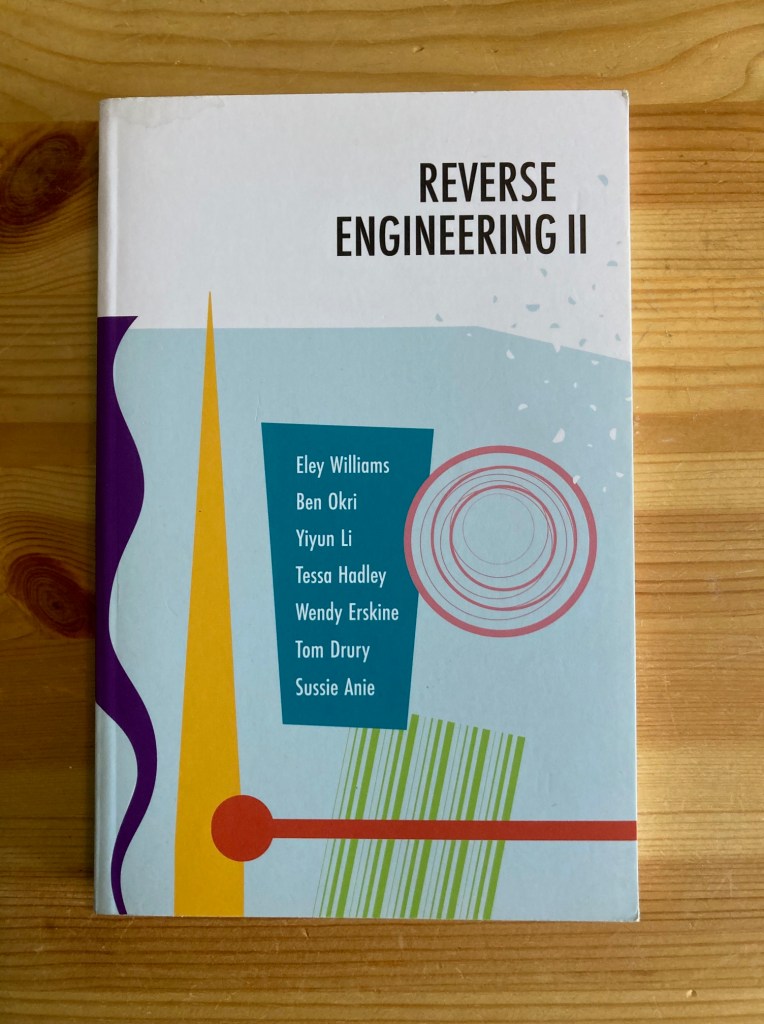
  • Reverse Engineering II

    Various authors, 2022

    Read: November 2023–April 2025 (stuck in the bookshelf traffic jam for a while)

    Edition read: Scratch Books, 2022, 173 pages

    Contemporary short-story anthology

    I read this alongside John Grisham’s The Firm whilst on holiday (St Ives, thanks for asking – yes, the surf was up). Let’s say these were contrasting reads.  

    This contemporary short-story anthology is made up of seven stories, each with an author interview at the end. I read the first collection* (also consisting of seven stories) in February 2023 and found a lot to pick apart in the interviews, which enhanced a second readthrough. 

    Whilst I didn’t enjoy this collection as much as the first, I was reminded of how interesting the form of the short story can be. Often, the form is, what is this story? What is it that’s actually happening? Some of these stories are quite hard to parse and further analyse, with a lot between the lines, such as in Bad Dreams, when the mother blames her husband for a nocturnal disarray – actually created by her child – in a kind of misunderstood epiphany. 

    However, by and large these stories avoid the mistake of having more between the lines than what is actually in them (a now-ceased subscription to Granta impressed upon me that something needs to happen in your stories, not just the idea of something). They are often slice-of-life accounts (All Will Be Well), and/or bring disparate elements brought together (Path Lights and Maintenance). 

    The interviews with the authors show as much; they are all very learned and sophisticated, combining clever and interesting concepts with carefully considered, sophisticated themes. So why didn’t I enjoy this collection as much as I did the first? A story can be clever, but something still needs to grab you – this was present in the closer, To All Their Dues, but sometimes I was left scratching my head (and not in the sense of being intrigued). 

    Worth reading? Yes. 

    Worth re-reading? Yes, although the first volume was better. 

    * I particularly enjoyed Theophrastus and the Dancing Plague by Jessie Greengrass. 


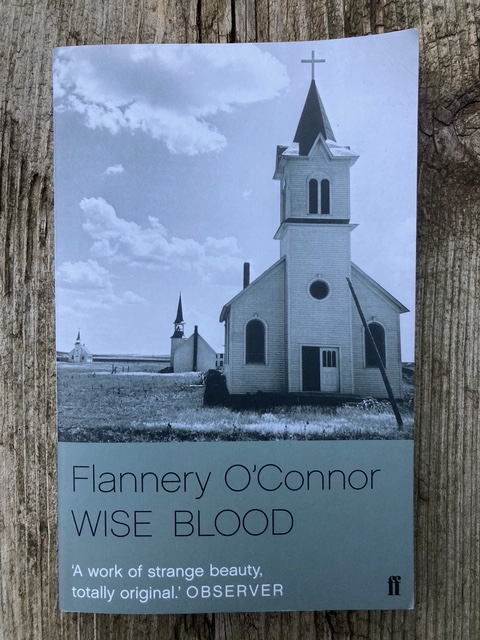
  • Wise Blood

    Flannery O’Connor, 1952 

    Read: June 2025

    Edition read: Faber and Faber, 2008, 160 pages 

    Southern Gothic 

    *Spoilers* 

    The demobbed Hazel Motes returns to the Deep South to set up his own church, ‘The Church Without Christ’ circa late 1940s, relocating to the big (fictional) city of Taulkinham from his now-abandoned rural hometown after finding that his family has all died or moved away.   

    Set on becoming a preacher until conscripted at 18, Mote set himself on becoming an atheist – or anti-religion – preacher, seemingly out of a sense of nihilism. However, it’s not the ordeal of war, and his resulting injury, cause this crisis of faith; he’s just told that he doesn’t have a soul by a fellow GI.  

    There is a certain class of purportedly ‘classic’ novels that I am not struck by, and the common factor behind my lack of comprehension seems to be, why are these people doing these things? 

    This was my first problem with Wise Blood; the protagonist is told that he doesn’t have a soul and he switches from knowing ‘by the time he was twelve years old that he was going to be a preacher’ to wanting to ‘be converted to nothing instead of to evil’. 

    It was this inscrutable nihilism which reminded me of The Outsider. I generally go in for Southern Gothics (William Gay, Harry Crews and Cormac McCarthy are favourites of mine), but I was underwhelmed in a way that reminded me of Albert Camus’s The Outsider, where the weight of expectations brought too much baggage. That’s not to say Wise Blood didn’t have both good and great scenes (in particular, the ending), just that there were elements and sections which didn’t land, such as when Enoch Emery, whose role as a character seems to be a metonym for the (religious) masses, finishes his part in the story out in the woods dressed up as an ape. Given that it is he who is of the ‘wise blood’, following it to make his decisions, is this just a critique of idolatry?  

    It’s certainly misanthropic, with few characters coming out of this looking good; the blind preacher Asa Hawkes turns out to be a fraud and as soon as Motes sets up his religion, the conman Hoover Shoats duplicates it in order to make money. Emery certainly introduces an element of the grotesque – dressing as an ape, stealing a preserved corpse – as well as comedy (such as his mispronunciation of ‘museum’). 

    Another element that I couldn’t work out was Asa Hawkes’s daughter, Sabbath Lily; I think she is supposed to be predatory, but Motes never seems particularly victimised by her. What was interesting was how it ended with Motes’ landlady trying to find meaning in his – now blind – eyes, at the moment of his death, searching hard and finding nothing – or maybe just whatever she wants to find. Overall, however, if this is a parable on organised religion, I’m not sure what the lesson is. 

    Worth reading? Yes, but I didn’t like it as much as I wanted to. 

    Worth re-reading? No – with the caveat that it is hard to fully understand on a first read. A short and quick read at 160 pages, I think a second read would bring more out of it. 

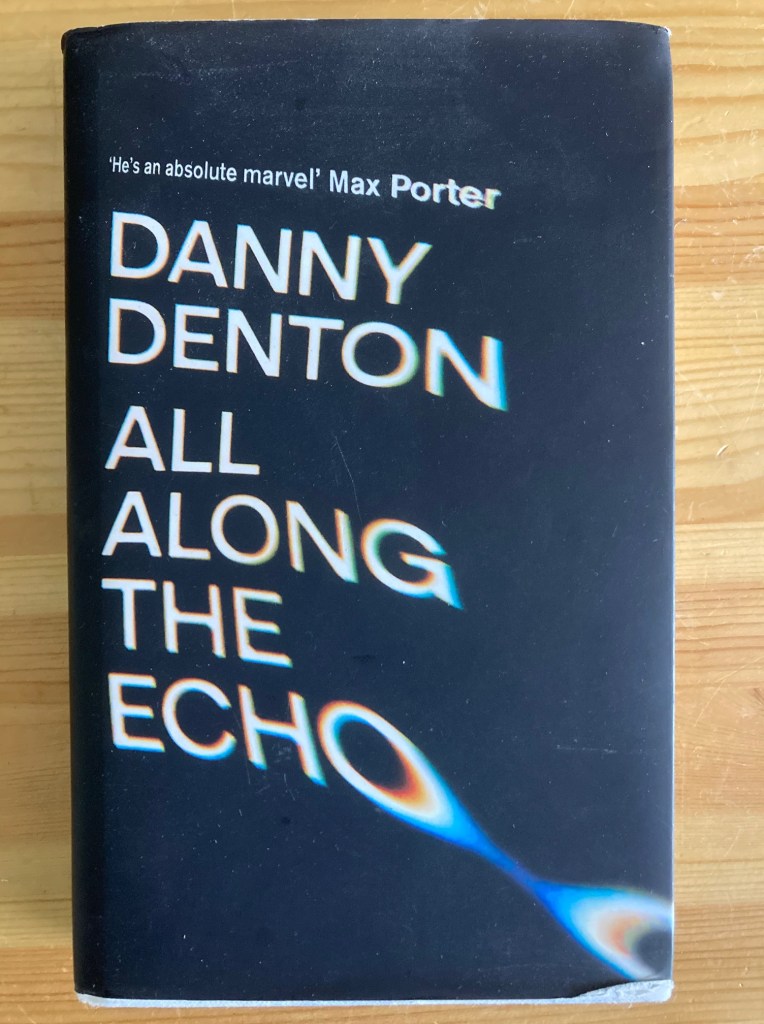
  • All Along the Echo

    Danny Denton, 2022

    Read: April–June

    Edition read: Atlantic Books 2022, 309 pages.

    Modern/Experimental fiction

    *Spoilers*

    DJ Tony and Producer Lou take a road trip across Ireland running a call-in competition for the Mazda 2 they are driving. In an inversion of the Troubles, London is under a swathe of terrorist attacks and Irish expats are returning home; the Mazda is to be given to whichever recently returned emigrant wins the competition.

    All Along the Echo takes an experimental form, with pages of radio static and graffiti, and there is a plenitude of voices, both over the radio and in person as it moves between perspectives. Despite the thought-provoking premise of the transposition of The Troubles, it all feels a bit low stakes: DJ Tony’s marriage is struggling (but it seems OK in the end?); Lou feels guilty about a time she cheated on her girlfriend (but this doesn’t come to anything?) and is worried about her missing cat (who her girlfriend eventually finds in – improbably – a sewer); there is teenage angst from a vulnerably housed graffiti artist (which feels a bit more real, but just ends when she makes some friends?); and there is a completely disconnected murder scene (everyone else is a recurring character – why not the ones in this?)

    I was sold on the blurb’s declaration that ‘All Along the Echo asks us whether our lives ever add up to more than the stories we tell ourselves’. I was left unconvinced of this; whilst it is skilfully written, for the most part the character arcs were flat and ultimately it all felt a bit scattered, leaving me unsure of what it was building towards.   

    Reading this review back, it feels a bit severe – the characters come across as real and the dialogue is convincing, and I was interested in seeing how the themes of a road trip, returning home and telling stories came together. It’s just that the story doesn’t add up to what it seems like it could have been. Whilst on a meta level that seems like it could be very clever – the narrative standing in for our lives – the execution has to match the ideas.  Given the interesting form, I am interested in seeing what else Denton has written.  

    Worth reading? No.

    Worth re-reading? No, but I am interested in Denton’s other books to see if the execution matches the ideas.

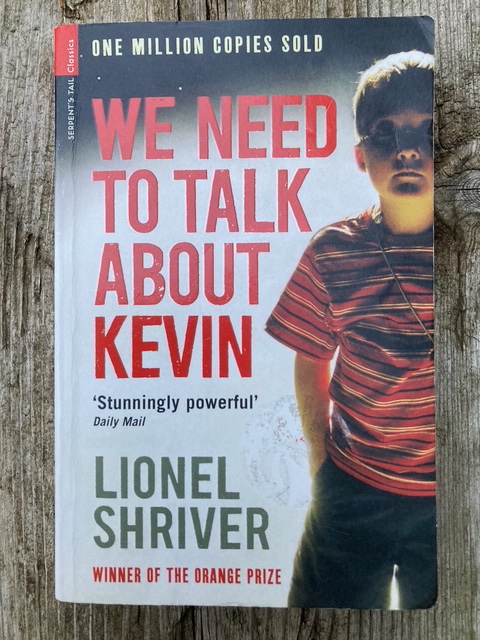
  • We Need to Talk About Kevin

    Lionel Shriver, 2003 

    July 2025  

    Edition read: Serpent’s Tail, 2011, 468 pages 

    Epistolary novel 

    A bracing take on motherhood from the perspective of the mother of a mass shooter.  

    The prose is intense and clever. I had to read this in short bursts, not just because at points it was uncomfortable (Shriver has created a chilling nemesis in Kevin), but because she writes so articulately and incisively that therein lays a tension between reading about Kevin’s next atrocity (he is adept with cruelty and violence) and soaking up the details of his mother’s life and perspective (a good problem to have as a reader – I can imagine creative-writing courses loving this). 

    The novel takes an epistolary form, the protagonist Eva Katchadourian writing to her estranged husband after what she refers to as ‘Thursday’ to finally express many an uncomfortable truth. That she refers to the mass murder perpetrated by her son as ‘Thursday’ suggests she is more OK with some of these uncomfortable truths than others; enter the unreliable narrator. 

    This narrator is clearly highly intelligent and slightly superior, with the narrative perspective completely hers – neither her husband nor Kevin get a word in directly. The epistolary form is an astute choice of form, allowing for this subjectivity,  a credible intimacy and a plot twist. A more predictable choice would have been letters to the titular inmate. Here, instead, it is how a husband and wife are left to communicate after a ruinous event. 

    Kevin is an intriguing villain and the defining question of the book shapes up to be, why did he do it –  what was wrong with him? And, as secondary questions, what if the only thing that someone likes is hurting others, and (don’t forgot that bit about the unreliable narrator?) what if, whatever you do, the child you raise is not a nice person? 

    Although his character is written as being perennially pitted against his mother, the answers to these questions are ultimately left to our interpretation. This lack of a clear ‘why’ makes Kevin’s villainy that more compelling. 

    Worth reading? Yes. Bring your sick bucket. 

    Worth re-reading? If you can take it. 

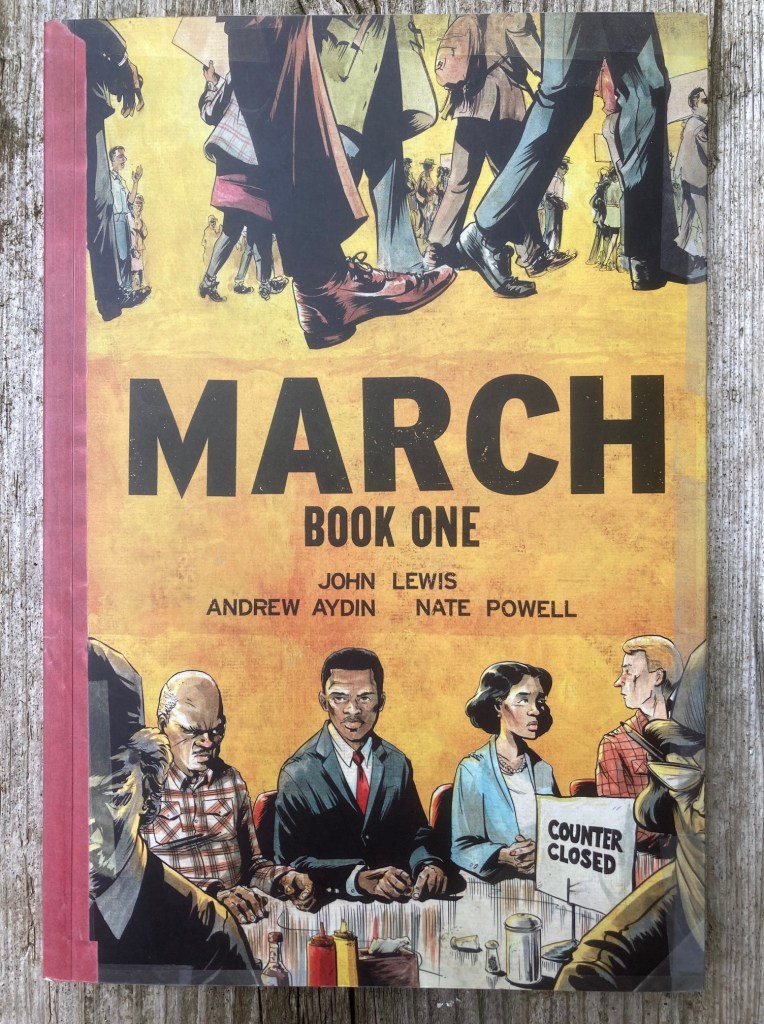
  • March: Book One

    John Lewis, Andrew Aydin and Nate Powell, 2013

    Read: March 2025

    Edition read: Top Shelf Productions, 121 pages

    Non-fiction graphic novel

    Part 1 of 3

    I read this – the opening volume of an autobiographical graphic novel of the American civil-rights activist John Lewis – a coincidental 60 years after the Selma to Montgomery march.

    It moves between the two narratives of Lewis’s day on 20 January 2009, and his life as a child on a sharecropper farmer in Alabama, establishing how one man’s story transformed into history.

    In a style best described as sober (although it is not without creativity – the panes change shape, with content often spilling over outside of them), it has the feel of a documentary (the black and white shading further adds to this), to tell Lewis’s story, including how the civil-rights movement largely worked not in rivers but in drops. The US civil-rights movement – at least in the UK – can sometimes be told in a reductive manner that is reduced to just Martin Luther King and Rosa Parks, with Lewis not a particularly well-known figure (‘Big Six’ was not a term I was familiar with), so this was an educational read. As much as March tells Lewis’s story, it’s also about the story of the civil-rights movement, combining the personal with history, making it as much a memoir as a history book. As volume one of three, it ends with the story and struggle still very much in motion. 

    So – why a graphic novel, especially given that Lewis already has a couple of published memoirs? The dramatic devices, such as the contrast between opening with the civil-rights activists beginning to cross the Edmund Pettus Bridge on 7 March 1965 and Lewis waking up in Washington D.C. on 20 January 2009, as well as the aforementioned black-and-white feel, are powerful, but the references by Lewis and his co-authors to the 1958 comic book Martin Luther King and the Montgomery Story are instructive; where we were, where we are, and where we might be in another 60 years.


    Worth reading? Yes.

    Worth re-reading? Yes.

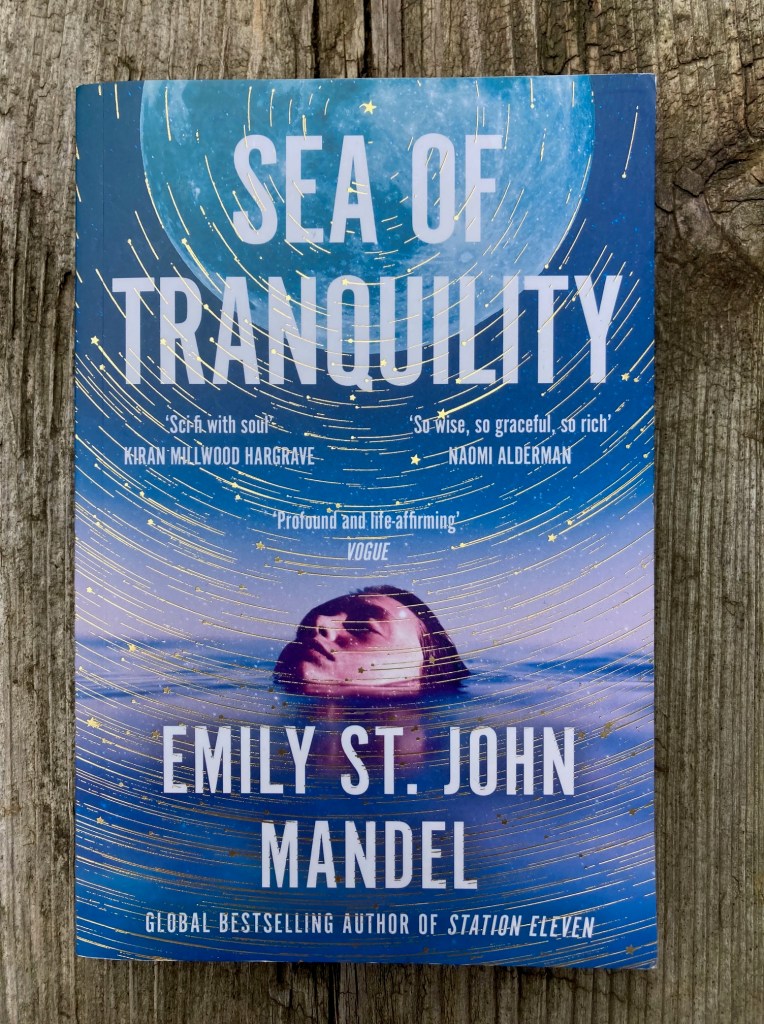
  • Sea of Tranquility

    Emily St. John Mandel, 2022 

    Edition read: Picador, 2022, 255 pages

    Fiction – (lo-fi) sci-fi

    I enjoyed Mandel’s previous titles The Lola Quartet and Station Eleven and their themes of escape, isolation and reinvention, as well as the subtlety of her writing. What at first appears to be a series of vignettes develops into a single story. Initially, it is not apparent how – and why – these stories are connected, but the success of Sea of Tranquility, and what makes it stand out, lies in that it takes an element of sci-fi – a genre new to Mandel’s writing, albeit in lo-fi form here – and uses it to focus on the human desires and failings of her range of characters. Mandel’s characters routinely paint themselves into corners, and in Sea of Tranquility the sci-fi aspect brings a literal element to the past revisiting the present. These characters – who here, can travel through time and change planets – still yearn, are still uneasy, live normal lives, oft to the point of numbness, all stressed by Mandel’s understated writing style. 

    Worth reading? Yes.

    Worth re-reading? Yes.