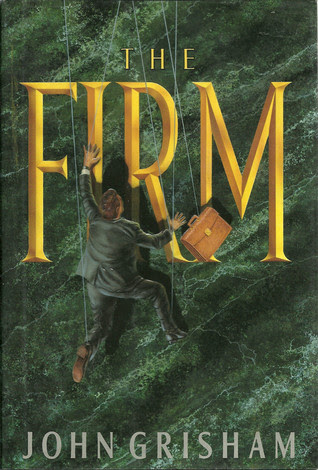
John Grisham, 1991
Read: April 2025
Edition read: Arrow 1991, 421 pages
Legal thriller
Besides a nice view, slightly wonky drawers and Cornwall’s slowest TV, my holiday accommodation came with this book. It’s a legal thriller and using tell, don’t show (rather than the reverse), it succeeds in being a page turner. This keeps the pace up, a mark of success for a book about a law firm (and Grisham is not shy about the legal terminology).
Most of the story is told from the perspective of the protagonist Mitch McDeere. It switches to those of other characters to feed the reader information to smash that plotline out. This makes it a bit too easy a read; for example, there would have been more narrative tension if it wasn’t made explicit that McDeere’s house had been bugged.
It also reads as a certain amount of wish fulfilment, with Grisham accentuating the materialistic details; McDeere is a working-class boy (who was also quarterback!) who done good and now wants to drive a car that shows it. His wife, Abby, has great legs. His eventual accomplice, Tammy, has great breasts. The in-laws – who are the wrong type of materialistic – suck. This last point says a bit more than I think Grisham intended to; while masquerading as a takedown of these things – materialism, sexism and racism (on this last point, stereotypes abound), The Firm simultaneously accentuates them.
Returning to the issue of narrative tension, there a couple of things that left me scratching my head. The incriminating photos of McDeere with the prostitute never become of any significance. This would have made the story more dramatic in terms of Mitch’s and Abby’s relationship, but in the final paragraph this whole lapse of character – a moment of reckoning – is just dropped. Why does McDeere’s colleague, Lamar Quin, turn a blind eye when he spots his brother, Ray (ultimately allowing Mitch to incriminate him)? When Avery is killed off, it is reported via dialogue between two other characters, without the intimacy of being taken to the scene being granted. Given how much information The Firm does feed to the reader, it feels odd for this sense of distance to be deployed here. Only two of the five murders of former lawyers are delved into; is it realistic for a firm of brilliant, perceptive, high-flying lawyers to not look into the other three? Tammy also receives little in the way of resolution, although I felt that here, Grisham keeping her at arm’s length, rather than drawing her deeper into the narrative, did work, in that the theme of people cutting the ties that bind and reinventing themselves recurs. Likewise, when the stereotypes are left alone, The Firm does come across as a strong piece of Americana; motels, diners, roads, reinvention and losers abound.
There are a few other things that work better; the death of the third brother, Rusty, in Vietnam, is mentioned, as is Mitch’s and Ray’s mother, but both of these elements are kept peripheral. The closest the latter comes to entering the story is Mitch almost – but not quite – visiting her. This is one of the more interesting, literary aspects of the novel, with this relationship being shown rather than told, and this estrangement never being fully revealed. The end feels rushed, with the last third dropping the ‘legal’ from ‘legal thriller’. Little detail is given about the ultimate fate of the firm and the mob. Mitch gets his ending. Abby doesn’t (or rather, she gets Mitch’s ending and is apparently completely fine with it). They have loads of money, but it seems like they are limited in many other ways (they can never return home; McDeere, the dedicated lawyer, can never practise law again). Arguably this is more realistic and grittier than everything just working out and the hero getting to carry on as he was (the FBI aren’t depicted as angels, and in some ways, McDeere is their victim), but the closing line of ‘Let’s get drunk and make a baby’ reads like a somewhat Victorian idea of a happy ending.
Worth reading? It’s a tempting yes, because it’s a quick, easy read, but ultimately, no.
Worth re-reading? No.
 The Page Count