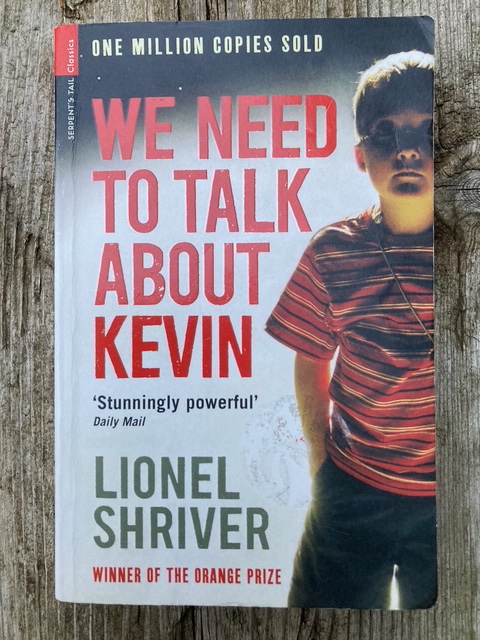
Lionel Shriver, 2003
July 2025
Edition read: Serpent’s Tail, 2011, 468 pages
Epistolary novel
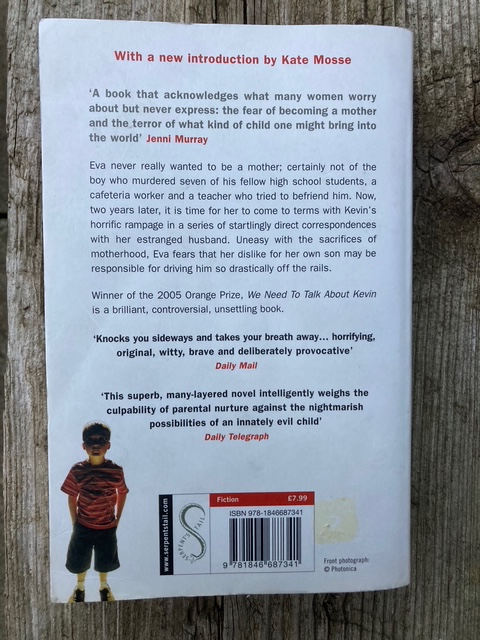
A bracing take on motherhood from the perspective of the mother of a mass shooter.
The prose is intense and clever. I had to read this in short bursts, not just because at points it was uncomfortable (Shriver has created a chilling nemesis in Kevin), but because she writes so articulately and incisively that therein lays a tension between reading about Kevin’s next atrocity (he is adept with cruelty and violence) and soaking up the details of his mother’s life and perspective (a good problem to have as a reader – I can imagine creative-writing courses loving this).
The novel takes an epistolary form, the protagonist Eva Katchadourian writing to her estranged husband after what she refers to as ‘Thursday’ to finally express many an uncomfortable truth. That she refers to the mass murder perpetrated by her son as ‘Thursday’ suggests she is more OK with some of these uncomfortable truths than others; enter the unreliable narrator.
This narrator is clearly highly intelligent and slightly superior, with the narrative perspective completely hers – neither her husband nor Kevin get a word in directly. The epistolary form is an astute choice of form, allowing for this subjectivity, a credible intimacy and a plot twist. A more predictable choice would have been letters to the titular inmate. Here, instead, it is how a husband and wife are left to communicate after a ruinous event.
Kevin is an intriguing villain and the defining question of the book shapes up to be, why did he do it – what was wrong with him? And, as secondary questions, what if the only thing that someone likes is hurting others, and (don’t forgot that bit about the unreliable narrator?) what if, whatever you do, the child you raise is not a nice person?
Although his character is written as being perennially pitted against his mother, the answers to these questions are ultimately left to our interpretation. This lack of a clear ‘why’ makes Kevin’s villainy that more compelling.
Worth reading? Yes. Bring your sick bucket.
Worth re-reading? If you can take it.
 The Page Count