Tag: Non-Fiction

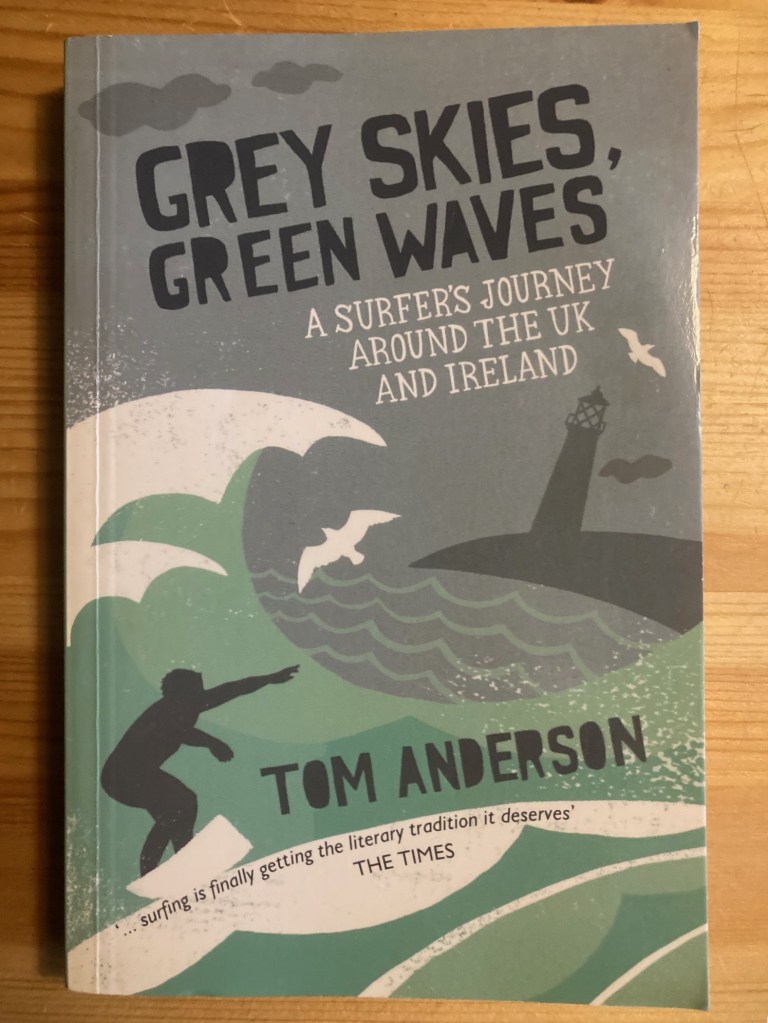
  • Grey Skies, Green Waves

    Tom Anderson

    Read: October 2025, re-read December 2025–January 2026 

    Edition read: Summersdale Publishers, 2010, 270 pages 

    Travel writing 

    Living in southeast England, friends, family and well-wishers in general (you’d be surprised) are often alarmed when I mention that you can surf in the British Isles. Isn’t it cold? they ask. Yes, I say. Bring a wetsuit. Embrace the pain. The truth of the matter is that there is a lot of surf to be had; it’s just very much a geography-determined past-time. However, wherever you do go to catch a wave, they will be right about one thing: it will be cold. 

    As such – although only partially for this reason – surfing in the British Isles is sometimes seen as the poor cousin of what’s to be had internationally. And thus, the premise of Grey Skies, Green Waves is partially set up: our narrator and author, Tom Anderson, has come to realise that he doesn’t really like surfing in the British Isles anymore, given how much warmer, sunnier and, er, wavier, the rest of world is. He has fallen into a slump of surfing locally only half-heartedly. 

    The other part of the premise – and actually, given that Anderon grew up with the niche but all-consuming hobby of surfing, the more important part – is that he has hit a slump of entering surf competitions, only to drastically underperform. He sets out to remedy this case of ‘I don’t like the things I use to’ by taking more opportunities to surf in more domestic locales, and herein he accounts several surfing trips around the British Isles, extending from south to north Wales (including a secret spot in Cardiff), Devon, Cornwall, John O’Groats, the Outer Hebrides, the River Severn and County Claire. 

    Anderson is clearly a Good Surfer (surfing triple overheaders near John O’Groats is not for beginners, nor for improvers), and at points he captures the various sensations of being in the water vividly (‘A thick slop of heavy, cold, dark water is the surfing equivalent onto several feet of powder on a snowboard, or a big, smooth tarmac slope to a skater […] To bury your board onto its edge and then throw all your weight through an arcing turn, knowing the water below will bear everything you throw at it, it a feeling of at-oneness with the ocean that rivals any tube ride.’) As a surfer’s lexicon will attest, a wave is not just a wave: it has speed, height, depth, shape, direction and length. Anderson does this well, although certain passages merit a bit of secondary reading (for example, what is a ‘wedge’?). It is at its most engaging when describing being in the water in good conditions, and the more enthused about that particular session he is, the better that Anderson writes about it. As the book goes on, the stoke improves., and as such, the last quarter of the book is the best. 

    The other element of this book is back on dry (well, damp) land, capturing the ennui that accompanies not just surfing, but many outdoor pursuits, in the British Isles: early (cold) mornings, waiting in (cold) carparks for the right conditions to materialise (if they do), drinking away (cold) afternoons in pubs, disappointing competition results and late (cold) night drives home. Whilst overall I appreciate the inclusion of this other side of surfing, there were a few non-surfing sections that did not exactly make for compelling reading, such as the passage where he retells someone else’s story about accidentally trapping someone in an automatically cleaning French toilet. 

    It is written in the first person, which while fitting for a piece of travel writing, could have included fewer conversations recounted word for word via direct speech. Although sometimes this does place you in the moment, at other times it could have been a bit terser and not lost anything. Sharing the same past-time, it would be remiss not to mention William Finnegan’s Barbarian Days as a simultaneously accompanying and contrasting read, but given their different focus. 

    Worth reading? Yes – persevere through the discouraging sections. 

    Worth re-reading? Yes, for the passages in the water in particular. 
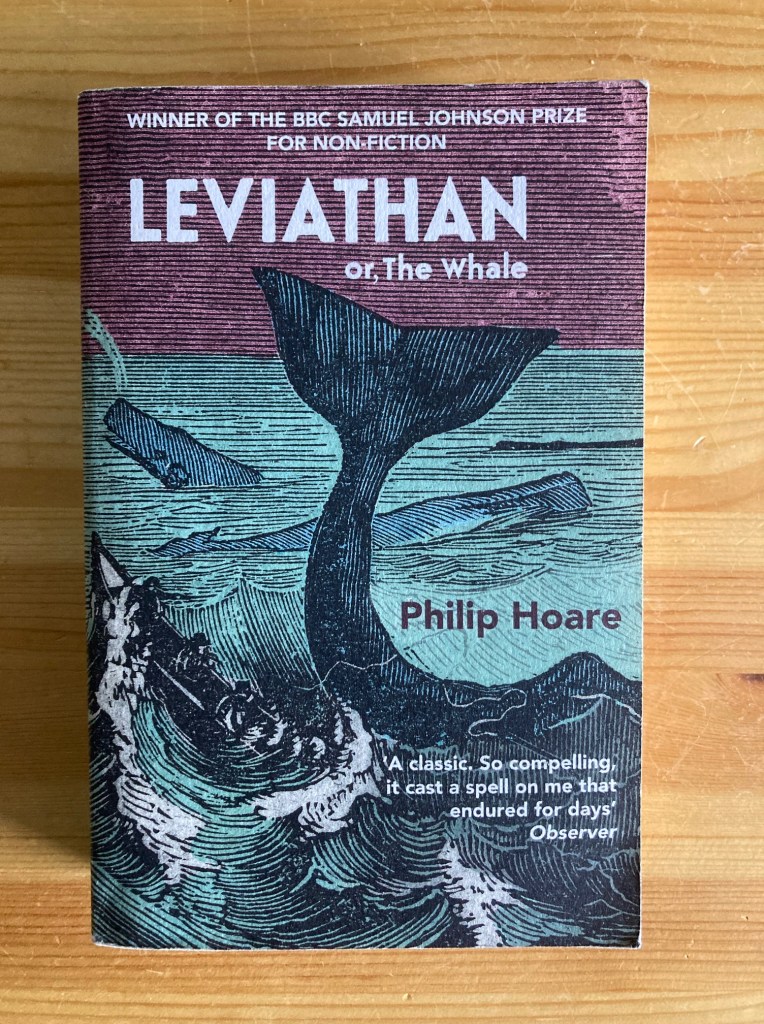
  • Leviathan or, The Whale

    Philip Hoare, 2008 

    Edition read: Fourth Estate, 2009, 421 pages 

    Read: August 2025 

    With a somewhat freeform approach, it is not immediately clear which category Leviathan falls into. At times possessing the discursiveness of a long essay, it reveals itself to be a mix of memoir and history, documenting both the relationship between humanity and whales and the author’s ambivalent perception of the sea. Besides being highly informative on the natural history of whales, the book takes on a confessional tone, with Hoare exploring universal themes such as loss and loneliness. It is poetic without losing grip of the subject at hand and in its broadness draws upon that lodestone of cetacean-related literature, Moby Dick*, as a cultural and literary reference point. As a book upon a naturalist interest projected outwards, it fits alongside titles like The Old Ways and H is for Hawk. As a book of obsession, it will certainly interest you in whales. 

    Worth reading? Yes 

    Worth re-reading? Yes 

    *I wouldn’t say a review is forthcoming per se, but I do intend to reread it at some point, with a particular focus on the chapter that is 100% about chum. 

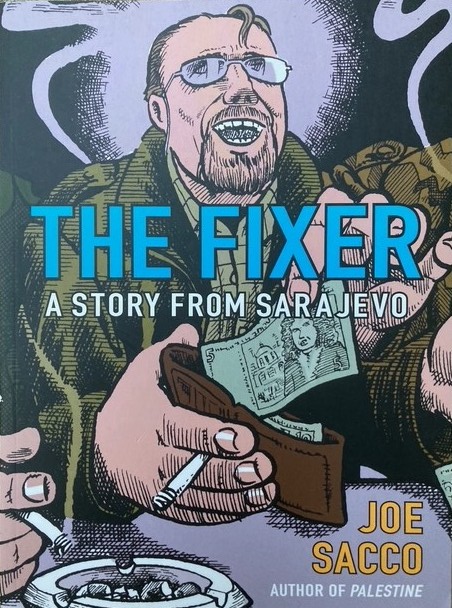
  • The Fixer

    Joe Sacco, 2004 

    Read: June 2025 (bought in Edinburgh) 

    Edition read: Jonathan Cape, 2004, 106 pages 

    Graphic Novel, black and white 

    *Spoilers* 

    The Fixer starts with Sacco’s return to Bosnia – specifically, Sarajevo – in 2001, having been there before during 1995 and 1996,* to continue his – now retrospective – reporting on the Bosnian War. 

    A major theme, constant across Sacco’s oeuvre, is conflicting narratives. Here, the narrative that receives (or demands?) the most (although not entirely uncritical) attention is that of the titular ‘fixer’, Neven. Sacco’s story morphs from that of the Bosnian War to that of Neven. He is a metonym for the whole of the Balkan conflict, as Sacco astutely identifies in his telling of this story, and his understanding of the value of Neven to him as a journalist. A Serb who fought on the side of the Bosnians, Neven is multi-faceted and contradictory. He makes his post-war living by helping journalists, with Sacco constantly unsure whether he is getting a deal or being fleeced, or if Neven is somehow a victim. 

    Sacco has a good sense of story and pace for what could be a morass of details and isn’t afraid to show himself as occasionally clueless and sweating over his own perceived amorality. His black and white crosshatching is as detailed as ever, eschewing exaggerated features in favour of a more restrained, serious style. 

    Worth reading? Yes. 

    Worth re-reading? Yes. 

    *Besides Sarajevo, Sacco also spend time reporting from the Bosnian enclave of Goražde, which resulted in Safe Area Goražde. 

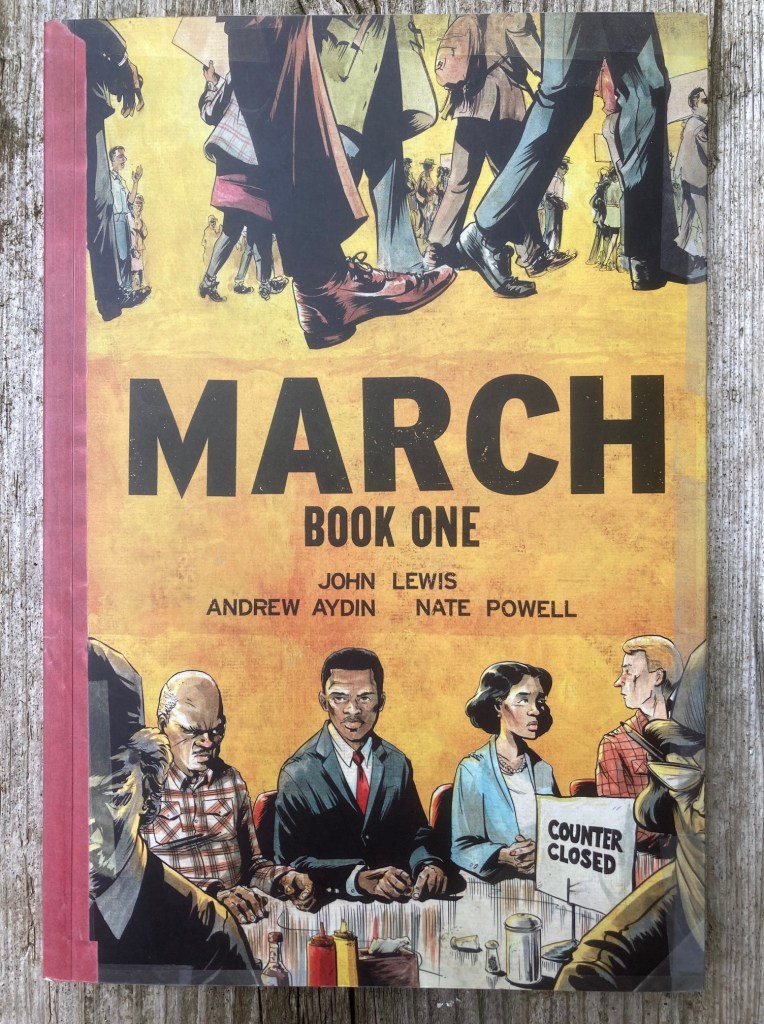
  • March: Book One

    John Lewis, Andrew Aydin and Nate Powell, 2013

    Read: March 2025

    Edition read: Top Shelf Productions, 121 pages

    Non-fiction graphic novel

    Part 1 of 3

    I read this – the opening volume of an autobiographical graphic novel of the American civil-rights activist John Lewis – a coincidental 60 years after the Selma to Montgomery march.

    It moves between the two narratives of Lewis’s day on 20 January 2009, and his life as a child on a sharecropper farmer in Alabama, establishing how one man’s story transformed into history.

    In a style best described as sober (although it is not without creativity – the panes change shape, with content often spilling over outside of them), it has the feel of a documentary (the black and white shading further adds to this), to tell Lewis’s story, including how the civil-rights movement largely worked not in rivers but in drops. The US civil-rights movement – at least in the UK – can sometimes be told in a reductive manner that is reduced to just Martin Luther King and Rosa Parks, with Lewis not a particularly well-known figure (‘Big Six’ was not a term I was familiar with), so this was an educational read. As much as March tells Lewis’s story, it’s also about the story of the civil-rights movement, combining the personal with history, making it as much a memoir as a history book. As volume one of three, it ends with the story and struggle still very much in motion. 

    So – why a graphic novel, especially given that Lewis already has a couple of published memoirs? The dramatic devices, such as the contrast between opening with the civil-rights activists beginning to cross the Edmund Pettus Bridge on 7 March 1965 and Lewis waking up in Washington D.C. on 20 January 2009, as well as the aforementioned black-and-white feel, are powerful, but the references by Lewis and his co-authors to the 1958 comic book Martin Luther King and the Montgomery Story are instructive; where we were, where we are, and where we might be in another 60 years.


    Worth reading? Yes.

    Worth re-reading? Yes.

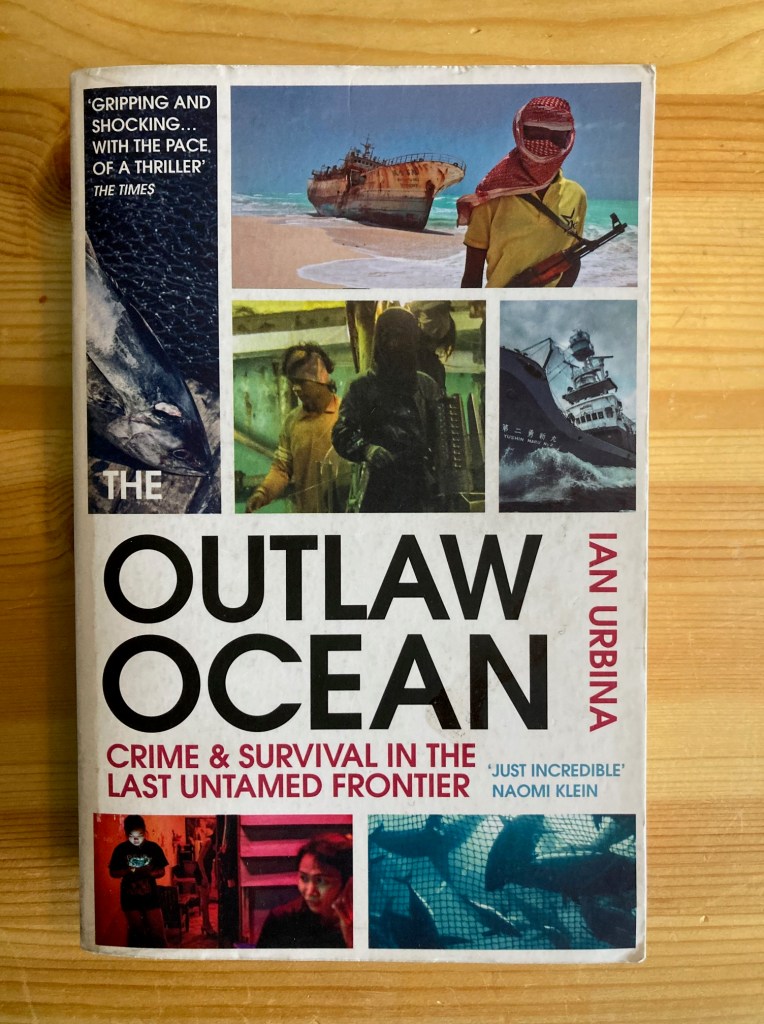
  • The Outlaw Ocean

    Ian Urbina , 2019

    Non-fiction 

    Read: May–June 2025 (re-read from 2021)

    Edition read: Vintage, 2020, 544 pages 

    Investigative journalism 

    Illegal fishing and whaling; under-resourced coastal authorities; vessels not fit for sea; human-rights abuses; abortions provided outside of national jurisdiction; stowaways castaway in the middle of oceans; slavers, slaves and unpaid mariners; repo men for stolen ships; oil explorations and environmental campaigners; waste disposal at sea and territorial disputes: Ian Urbina’s The Outlaw Ocean covers a litany of crimes and otherwise legally unclear practices at sea. 

    This is a highly readable book, combining an exhaustive approach towards small details with careful analyses of the big picture, which, chapter by chapter, rarely turn out to be black and white. Even when presenting a morass of details – sometimes legalistic, sometimes moral, sometimes technical – Urbina knows how to structure a story in a way that makes each of these 14 chapters captivating. 

    The chapters tend to fall into one of two categories: slightly more rote – but still highly engaging – matters, such as Palau trying to police fishing in its huge seas with limited resources, fishing vessels not fit for service sinking when trying to take in huge catches, people being trafficked to work at sea (there are a couple of chapters on this), oil exploration and environmental campaigning against it. The other category could be roughly phrased as ‘the unusual’ – the formation and continuing existence of Sealand, an organisation which provides abortions at sea on a dedicated yacht and the repo men who specialise in retrieving stolen ships. 

    Although it could have started with any of the chapters, Urbina plays it smart and starts with the thriller of Sea Shepherd chasing the illegal fishing vessel The Thunder through the Southern Ocean for nearly four months. Given that Sea Shepherd can be a polarising group, it was more nuanced than I expected, showing how groups of all shades sometimes chose to work with the law and sometimes outside. 

    It’s a chunky book but it’s never slow going; this is a re-read on my part, and should Urbina write any other books, I would read them based on the quality of this one. A bit of sailing on my own part has imparted the knowledge that the more time you spent at sea, the greater the sense that you know even less about it. In a kind of parallel to this more philosophical musing, one of the recurring themes from Urbina’s trips to sea, and present throughout Outlaw Ocean, is how easy it is to hide crimes and questionable behaviour at sea. Here be monsters. 

    Worth reading? Yes. 

    Worth re-reading? Yes. 

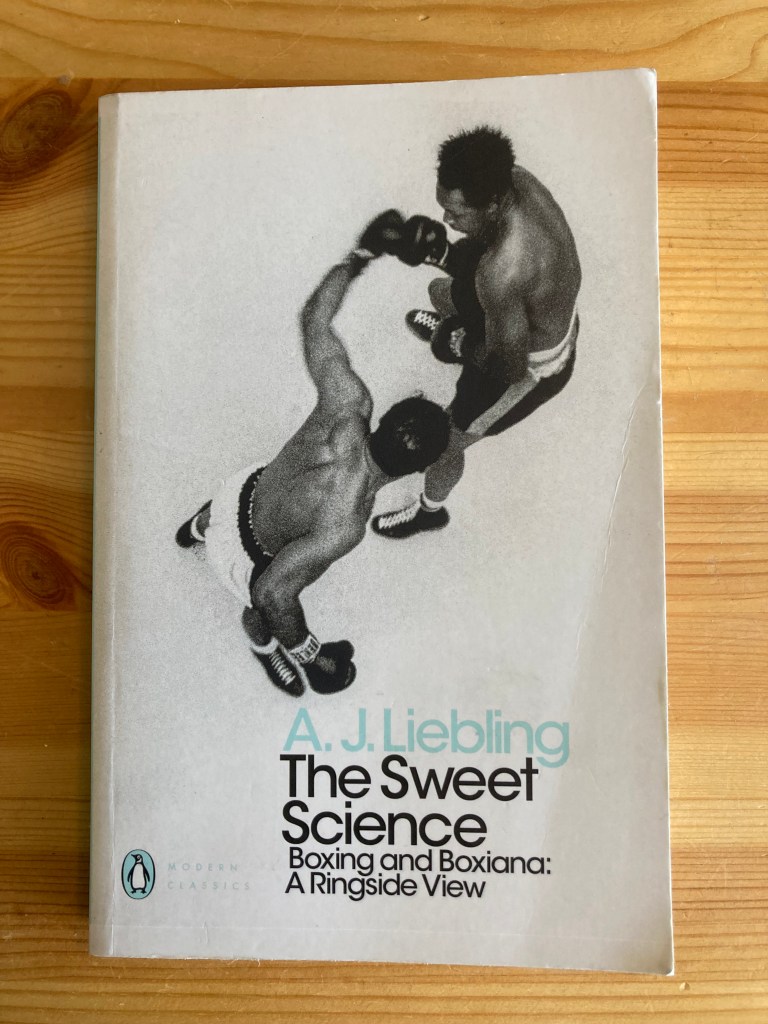
  • The Sweet Science: Boxing and Boxiana: A Ringside View

    AJ Liebling, 1956

    Read: January April 2025 

    Edition read: Penguin Modern Classics 2018, 232 pages

    Non-fiction 

    Liebling was a sports correspondent and this book was originally a series of articles for The New Yorker.

    Liebling covers a multitude of fights spanning – from what I could figure out – 1951 to 1955, over 18 articles (it’s hard to say how many fights exactly, because he refers to historic fights – some of which predate him – on a regular basis). These fights include boxers who are considered to be some of the best ever: Sugar Ray Robinson, Rocky Marciano, Joe Louis, Willie Pep, Sandy Saddler and Joe Walcott.  As such, this is widely considered to be a classic of boxing literature.

    The old-timey, black-and-white quality comes off the page; sometimes this is charming, sometimes it feels dated. Liebling, as befitting a writer for The New Yorker, has an elaborate vocabulary, which at times comes across as archaic (such as the use of ‘milling coves’) or stuffy (just because you can use a French phrase, doesn’t mean that you must*). He does also write with great sarcasm at moments. Largely set in New York, many of the figures read like a Looney Tune character; this is not necessarily a criticism of the writing, but at points some of the dialogue reminded me of Bugs Bunny (‘waidle you read the papers tomorrow’), which does make it hard to take seriously. 

    Nonetheless, The Sweet Science remains a valuable insight into a particular period and captures what Liebling accurately believed to be a vanishing world. By the fourth paragraph of the introduction, he has already raised his contention that TV was killing off boxing for the sake of advertising (hence his repeated references to beer and razor blades at any opportunity). With that said, he regularly goes to what he readily depicts as sold-out fights, such as Rocky Marciano versus Archie Moore – as captured in his many descriptions of crowded New York streets, bars, venues, restaurants and gyms. These pieces also show his obsession with boxing; no dilettante, he goes to sparsely attended fights as well as the sold-out ones (hence the subtitle). 

    Liebling takes on the unenviable task of describing different boxing styles, although he perhaps reads a bit too much into the physique of fighters. As with Norman Mailer’s The Fight, this always extends to covering the exact shade of black fighters’ skin. 

    Of course, Liebling didn’t know that he was writing in what is now considered one of boxing’s golden ages, and often seems somewhat underwhelmed. It is interesting that Liebling denounces aspects of this era.  

    Ultimately, its dated nature made it hard to read at points. If you stick with it, it is an interesting snapshot into boxing and where it sat within society. In this sense, because of these flaws, it is comparable to Mailer’s The Fight

    Worth reading? Yes, although it is dated. 

    Worth re-reading? No. 

    * Besides boxing, apparently Liebling loved eating and writing about French food. An improbable pairing.