Author: gregmbrooks

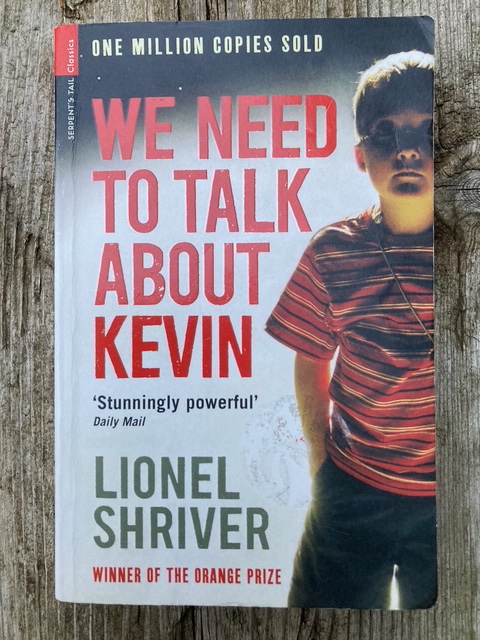
  • We Need to Talk About Kevin

    Lionel Shriver, 2003 

    July 2025  

    Edition read: Serpent’s Tail, 2011, 468 pages 

    Epistolary novel 

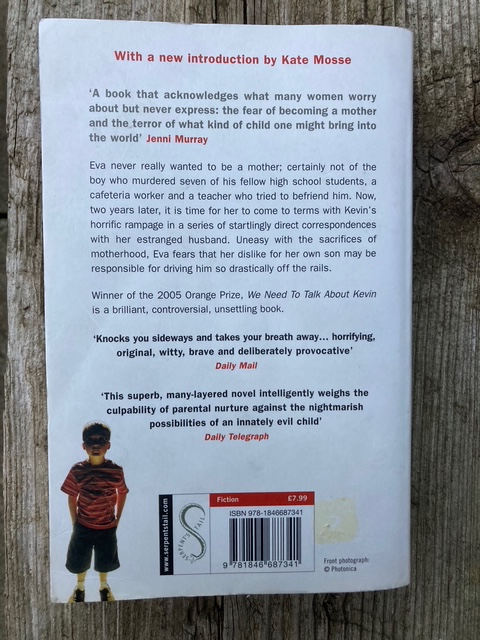
    A bracing take on motherhood from the perspective of the mother of a mass shooter.  

    The prose is intense and clever. I had to read this in short bursts, not just because at points it was uncomfortable (Shriver has created a chilling nemesis in Kevin), but because she writes so articulately and incisively that therein lays a tension between reading about Kevin’s next atrocity (he is adept with cruelty and violence) and soaking up the details of his mother’s life and perspective (a good problem to have as a reader – I can imagine creative-writing courses loving this). 

    The novel takes an epistolary form, the protagonist Eva Katchadourian writing to her estranged husband after what she refers to as ‘Thursday’ to finally express many an uncomfortable truth. That she refers to the mass murder perpetrated by her son as ‘Thursday’ suggests she is more OK with some of these uncomfortable truths than others; enter the unreliable narrator. 

    This narrator is clearly highly intelligent and slightly superior, with the narrative perspective completely hers – neither her husband nor Kevin get a word in directly. The epistolary form is an astute choice of form, allowing for this subjectivity,  a credible intimacy and a plot twist. A more predictable choice would have been letters to the titular inmate. Here, instead, it is how a husband and wife are left to communicate after a ruinous event. 

    Kevin is an intriguing villain and the defining question of the book shapes up to be, why did he do it –  what was wrong with him? And, as secondary questions, what if the only thing that someone likes is hurting others, and (don’t forgot that bit about the unreliable narrator?) what if, whatever you do, the child you raise is not a nice person? 

    Although his character is written as being perennially pitted against his mother, the answers to these questions are ultimately left to our interpretation. This lack of a clear ‘why’ makes Kevin’s villainy that more compelling. 

    Worth reading? Yes. Bring your sick bucket. 

    Worth re-reading? If you can take it. 

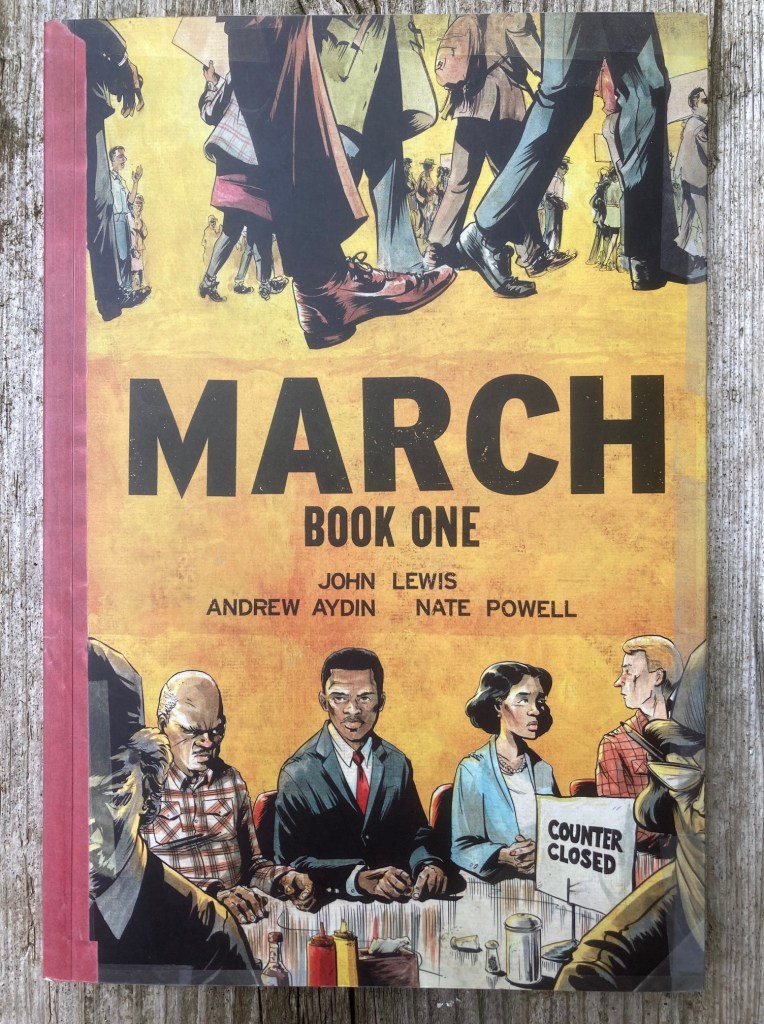
  • March: Book One

    John Lewis, Andrew Aydin and Nate Powell, 2013

    Read: March 2025

    Edition read: Top Shelf Productions, 121 pages

    Non-fiction graphic novel

    Part 1 of 3

    I read this – the opening volume of an autobiographical graphic novel of the American civil-rights activist John Lewis – a coincidental 60 years after the Selma to Montgomery march.

    It moves between the two narratives of Lewis’s day on 20 January 2009, and his life as a child on a sharecropper farmer in Alabama, establishing how one man’s story transformed into history.

    In a style best described as sober (although it is not without creativity – the panes change shape, with content often spilling over outside of them), it has the feel of a documentary (the black and white shading further adds to this), to tell Lewis’s story, including how the civil-rights movement largely worked not in rivers but in drops. The US civil-rights movement – at least in the UK – can sometimes be told in a reductive manner that is reduced to just Martin Luther King and Rosa Parks, with Lewis not a particularly well-known figure (‘Big Six’ was not a term I was familiar with), so this was an educational read. As much as March tells Lewis’s story, it’s also about the story of the civil-rights movement, combining the personal with history, making it as much a memoir as a history book. As volume one of three, it ends with the story and struggle still very much in motion. 

    So – why a graphic novel, especially given that Lewis already has a couple of published memoirs? The dramatic devices, such as the contrast between opening with the civil-rights activists beginning to cross the Edmund Pettus Bridge on 7 March 1965 and Lewis waking up in Washington D.C. on 20 January 2009, as well as the aforementioned black-and-white feel, are powerful, but the references by Lewis and his co-authors to the 1958 comic book Martin Luther King and the Montgomery Story are instructive; where we were, where we are, and where we might be in another 60 years.


    Worth reading? Yes.

    Worth re-reading? Yes.

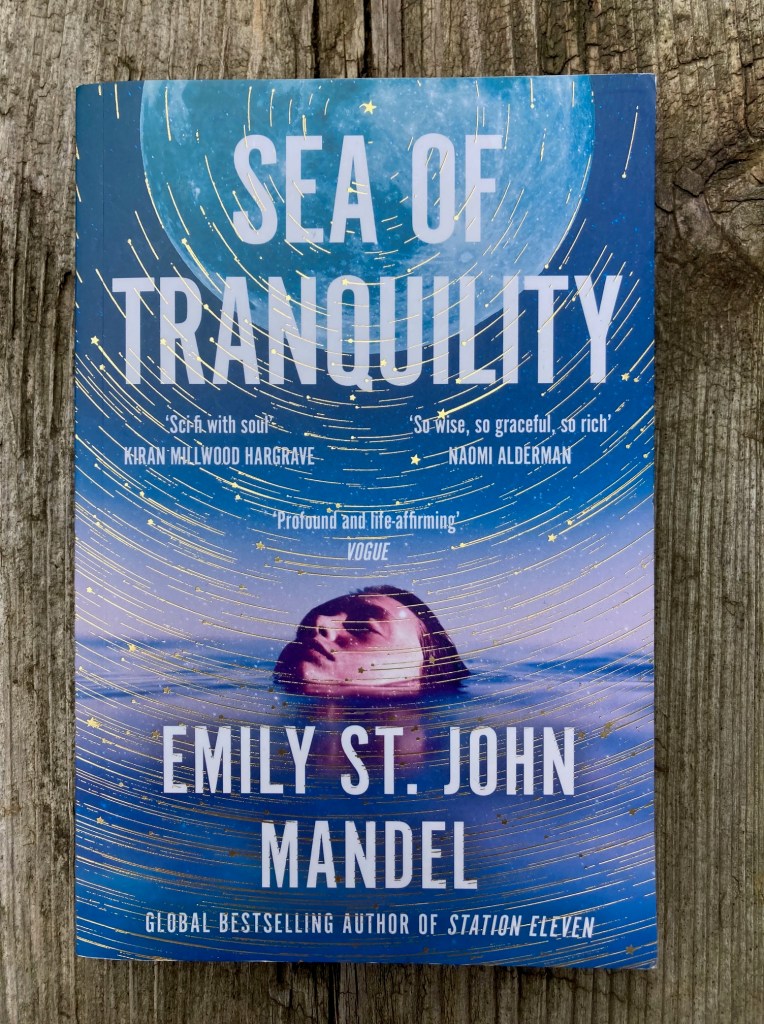
  • Sea of Tranquility

    Emily St. John Mandel, 2022 

    Edition read: Picador, 2022, 255 pages

    Fiction – (lo-fi) sci-fi

    I enjoyed Mandel’s previous titles The Lola Quartet and Station Eleven and their themes of escape, isolation and reinvention, as well as the subtlety of her writing. What at first appears to be a series of vignettes develops into a single story. Initially, it is not apparent how – and why – these stories are connected, but the success of Sea of Tranquility, and what makes it stand out, lies in that it takes an element of sci-fi – a genre new to Mandel’s writing, albeit in lo-fi form here – and uses it to focus on the human desires and failings of her range of characters. Mandel’s characters routinely paint themselves into corners, and in Sea of Tranquility the sci-fi aspect brings a literal element to the past revisiting the present. These characters – who here, can travel through time and change planets – still yearn, are still uneasy, live normal lives, oft to the point of numbness, all stressed by Mandel’s understated writing style. 

    Worth reading? Yes.

    Worth re-reading? Yes.

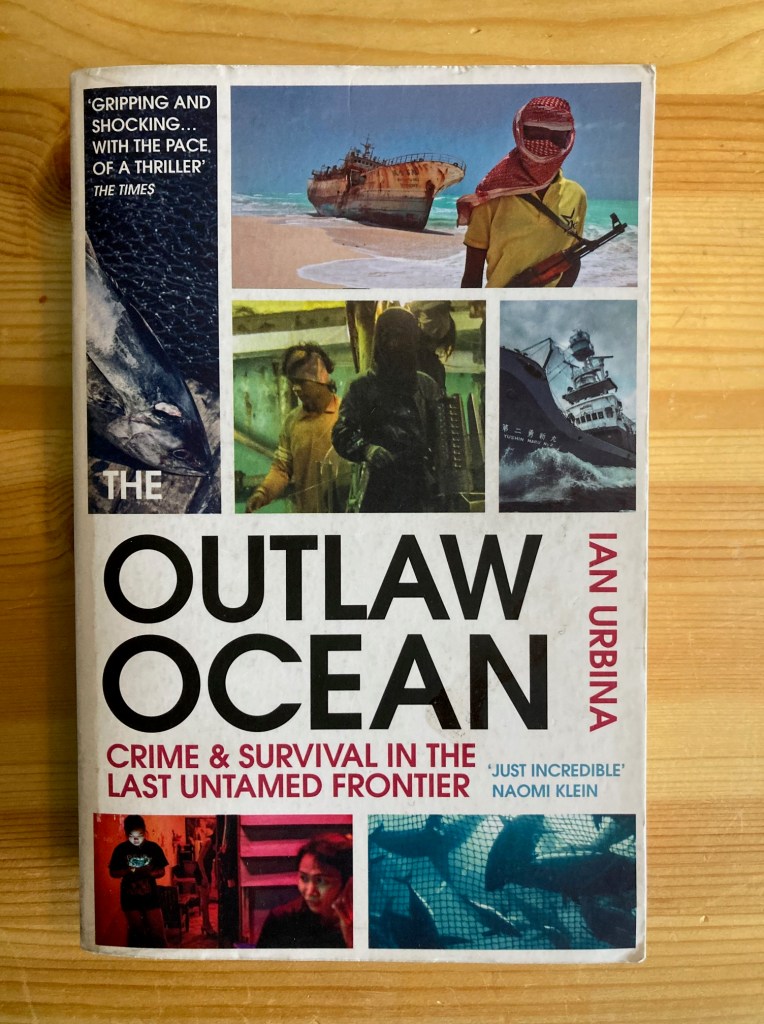
  • The Outlaw Ocean

    Ian Urbina , 2019

    Non-fiction 

    Read: May–June 2025 (re-read from 2021)

    Edition read: Vintage, 2020, 544 pages 

    Investigative journalism 

    Illegal fishing and whaling; under-resourced coastal authorities; vessels not fit for sea; human-rights abuses; abortions provided outside of national jurisdiction; stowaways castaway in the middle of oceans; slavers, slaves and unpaid mariners; repo men for stolen ships; oil explorations and environmental campaigners; waste disposal at sea and territorial disputes: Ian Urbina’s The Outlaw Ocean covers a litany of crimes and otherwise legally unclear practices at sea. 

    This is a highly readable book, combining an exhaustive approach towards small details with careful analyses of the big picture, which, chapter by chapter, rarely turn out to be black and white. Even when presenting a morass of details – sometimes legalistic, sometimes moral, sometimes technical – Urbina knows how to structure a story in a way that makes each of these 14 chapters captivating. 

    The chapters tend to fall into one of two categories: slightly more rote – but still highly engaging – matters, such as Palau trying to police fishing in its huge seas with limited resources, fishing vessels not fit for service sinking when trying to take in huge catches, people being trafficked to work at sea (there are a couple of chapters on this), oil exploration and environmental campaigning against it. The other category could be roughly phrased as ‘the unusual’ – the formation and continuing existence of Sealand, an organisation which provides abortions at sea on a dedicated yacht and the repo men who specialise in retrieving stolen ships. 

    Although it could have started with any of the chapters, Urbina plays it smart and starts with the thriller of Sea Shepherd chasing the illegal fishing vessel The Thunder through the Southern Ocean for nearly four months. Given that Sea Shepherd can be a polarising group, it was more nuanced than I expected, showing how groups of all shades sometimes chose to work with the law and sometimes outside. 

    It’s a chunky book but it’s never slow going; this is a re-read on my part, and should Urbina write any other books, I would read them based on the quality of this one. A bit of sailing on my own part has imparted the knowledge that the more time you spent at sea, the greater the sense that you know even less about it. In a kind of parallel to this more philosophical musing, one of the recurring themes from Urbina’s trips to sea, and present throughout Outlaw Ocean, is how easy it is to hide crimes and questionable behaviour at sea. Here be monsters. 

    Worth reading? Yes. 

    Worth re-reading? Yes. 

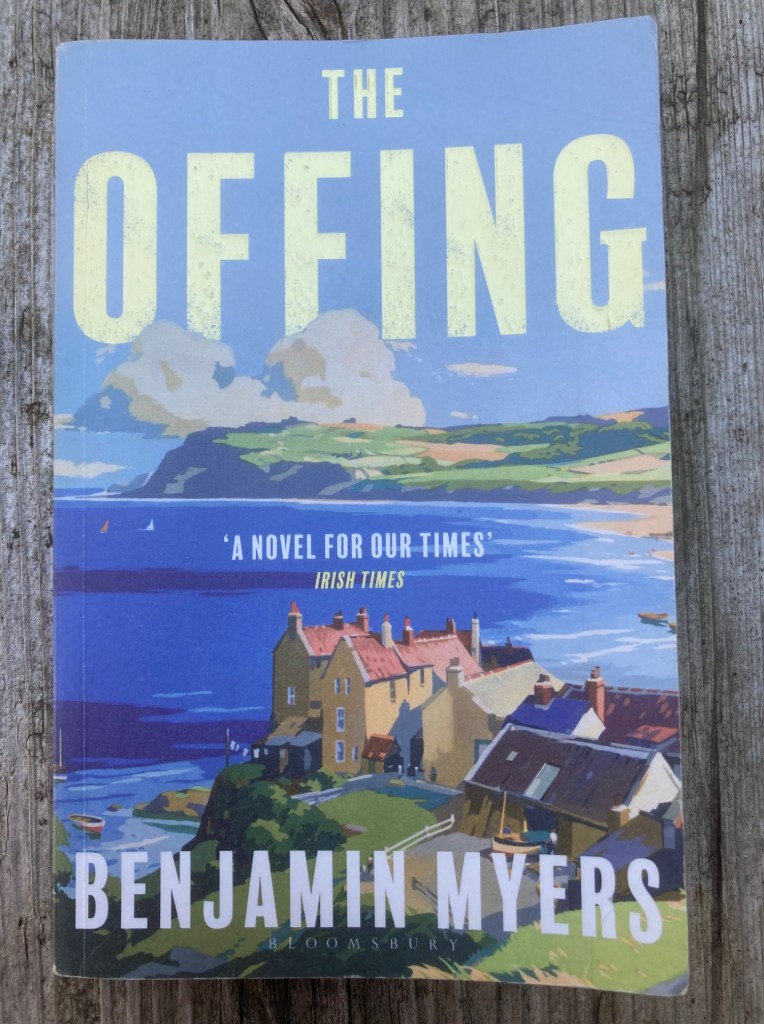
  • The Offing

    Benjamin Myers, 2019  

    Read: September 2024 – April 2025 (stuck in the book traffic jam) 

    Edition read: Bloomsbury Publishing, 2020, 260 pages 

    Fiction – Bildungsroman 

    The plotline of The Offing is slightly more pedestrian than Myer’s more typical ‘Northern Gothic’ novels; working-class boy (Robert) from post-WW2 English mining town meets eccentric upper-class woman (Dulcie), who has retreated from society due to long-lost love, where they experience mild culture clash and she exposes him to the better things in life. 

    Told in the first person, the story takes an analeptic form, which somewhat explains the rich vocabulary, but for a narrator introduced as painfully ancient, he has a remarkable memory for details. Read this deliberately rich vocabulary with patience and the five senses get a workout; the colours, smells, feelings, sights and sounds of nature all feature regularly and prominently and there are some great turns of phrase (‘The ashen sea roared in the distance like a football stadium witnessing an extra-time injustice’). However, the plentitude of what I came to feel were overly frequent and verbose descriptions of nature did get monotonous. 

    There are two main sections – Robert by himself, which if anything is slightly more interesting, capturing the landscape(s) of northern England as he walks across it, and then when he encounters Dulcie. There is a subplot about poetry, which seems slightly meta – is Myers talking about how Northern working-class people aren’t supposed to like poetry, but if you take them out the pits, they do? 

    If there had been something else happen, it could have had a more compelling sense of drive; unfortunately, besides the over-the-top descriptions, the stakes just feel a bit low. 

    Worth reading? No, even though I came into this wanting to like it – Myers has written some brilliant books. 

    Worth re-reading? No. Myer’s other books – The Gallows Pole and These Darkening Days – however, are well worth a read. 

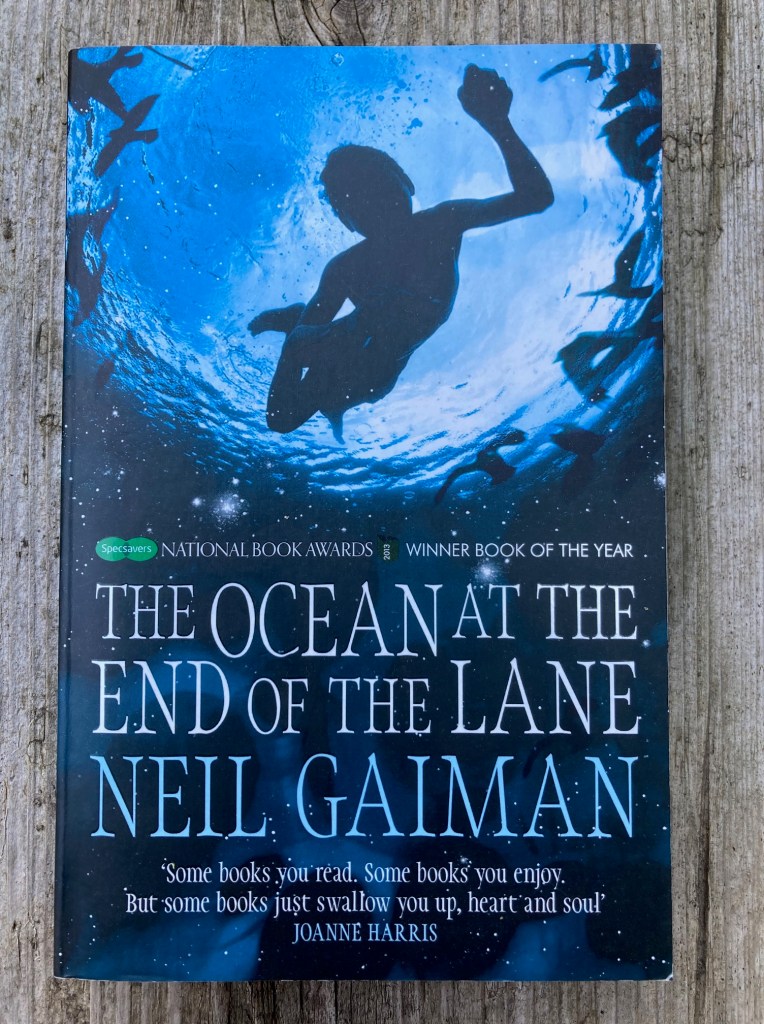
  • The Ocean at the End of the Lane

    Neil Gaiman, 2013 

    Read: June 2025

    Edition read: Headline Publishing Group, 2013, 235 pages 

    Fiction – Fantasy 

    Read on a trip to Edinburgh 

    *Spoilers* 

    I saw a National Theatre production of this in November 2023 and did my best to follow the plot, but at a certain point it just took an absolute left turn to comprehension and I had no idea what was going on. Let’s see if I can do any better with the book.

    It starts with a funeral, which leads the (unnamed) narrator to revisit his childhood home, and the pond, or the ‘ocean’, at the end of the lane. In turn, he remembers a childhood memory – the story at hand – for the first time. As such, it is told in the form of analepsis. Here, death is a gateway.

    Much like Gaiman’s Neverwhere, the story takes place in a universe that could be ours, until it very much doesn’t, with the introduction of a different – perhaps parallel – universe. I spent a while considering whether this was surrealism or fantasy; despite the title, I think it’s the latter. The element of surrealism that is a lack of understanding of the rules of the universe, and the suspension of the normal rules – those of reality – evolves into fantasy as the sense of normalcy completely gives way to another, strange and unfamiliar, world.

    It is written from a child’s perspective, quickly deploying the trope of a child dealing with gaps in their knowledge and understanding, particularly of adult themes, with the early suicide of the opal miner. The narrator, who often articulates his feelings of a lack of agency, is convincingly passive as a child. I wondered what the significance of the opal miner was for a bit: he is gone almost as soon as he appears. Ultimately, besides this character providing a dark example of something beyond the child narrator’s understanding, as well as driving the plot forward, I read it as a note on the letdowns of adulthood. As this suggests, although it could be read by older children or young adults, it works on two levels, and in many ways this is quite a dark book; besides looking at loss (such as when Lettie is hurt protecting the narrator and has to ‘rest’ for what turns out to be a lifetime) it draws upon what adults say/look like versus what they actually do/how they act, the protagonist’s father’s affair with Ursula being an example.

    As this early development suggests, the plot whips along (I read this over a long weekend), although the logic behind ‘why is this happening?’ is not always apparent and re-reading a couple of pages proved necessary (this made me feel better for not having been able to follow the play). Gaiman is inventive, creating his own tropes, such as the suicide of the miner summoning the spirit/Ursula to distribute money. Although he has written a compelling fantasy, this book could be read on a purely symbolic level for memory and loss of childhood, the ocean being something to return to and submerge in but never cross.

    Worth reading? Yes.

    Worth re-reading? Yes

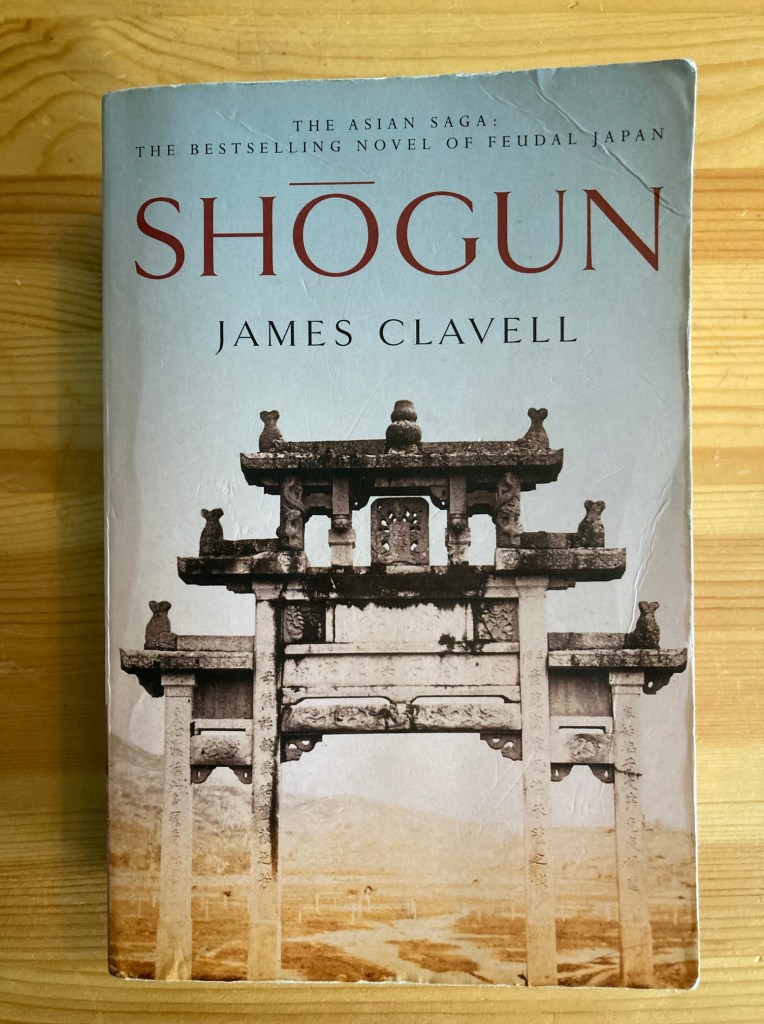
  • Shogun

    James Clavell, 1975

    Read: January – June 2025

    Edition read: Hodder & Stoughton 2017, 1125 pages

    Historical fiction

    *Spoilers* 

    In Down Under, Men at Work sing their way through a couple of culture clashes. These all turn out to be relatively benign; cars break down on hippie trails, people make Vegemite* sandwiches, beer flows and people chunder. There is an attempted drug deal, but the proud Australian tells the Bombayite that he comes from the land of plenty, and that Aussie rules is the best sport, so clear off mate.** In Shōgun, the learning curve is a bit steeper; the (Protestant) Elizabethan protagonist gets shipwrecked in ‘the Japans’, the only people who can translate to and from Japanese are pesky Catholic missionaries, people are either beheaded or expected to commit ritual suicide (‘seppuku’) for slight infractions, eating raw fish is a yes and daily baths are expected.

    The Erasmus, a trading ship of Elizabethan-era Dutchmen and an Englishman (John Blackthorne, the navigator and our protagonist), arrives at a key moment in the history of feudal Japan; the Taiko (Japan’s main man) has died, leaving an infant son and five lord regents to rule for him as a council until he comes of age. These five regents all want to kill each other off, but manners dictate that no one can even openly show that they are mildly offended by obvious stingers, so they resort to a lot of scheming instead. Talking of scheming, the Portuguese Jesuits are already there, facilitating their monopoly of trade between Japan and China, as well as working on The Treaty of Tordesillas. They are not pleased about a bunch (in fact, the very first bunch) of Protestants appearing. 

    As such, Shōgun covers the build-up to war and the requisite manoeuvring, moving between the perspective of various characters, including Blackthorne, to do its world building. Although based on a true story, from a post-colonial perspective, that a story about feudal Japan had to involve an Englishman seems a bit questionable, although Clavell’s approach does make for an interesting premise. (This is also not to mention that feudal Japan did a fair bit of colonising of its own.) Upon first consideration, it just seems improbable that Blackthorne is the protagonist (and also gets the main lady.) However, he is very much used as an oft-unwitting chesspiece in a game of political chess; it ends with an soliloquy from Toranaga (who, indisputably, grows into being the Shōgun of this story), rather than from Blackthorne, wherein it is revealed that the latter’s plans of sailing off into the sunset back home to England may not quite work out. Emphasising this point, the rest of the crew of The Erasmus quickly become minor characters; their main purpose is to show the tension between what Blackthorne was and what he becomes. Fortunately, Clavell doesn’t try to place Blackthorne on a typical hero’s path and make him become a great warrior who comes to surpass his (many) enemies in combat; instead, Blackthorne quickly comes to understand that he is no match for any samurai. 

    Shōgun packs a lot of plot into its 1000+ pages, and my initial assumption that there was going to be a swordfight on every page was incorrect – it actually ends before the major warfaring begins, being very much about the preceding manoeuvering. The flipside to this is that what with the politics, plotting, spying and power struggles, the plot can be hard to keep up with and the sections focused on social propriety make for slower reading. 

    When it comes to show versus tell, it leans towards tell, wherein a lot of historical information about Japan, and the personal stories of characters, are set up, generally via free direct discourse. It is a nice touch that Toranaga disappears at times, not just from the events of the book but also from the narrative, with Clavell resisting the urge to jump into his perspective and instead let the reader get a taste of the other characters’ confusion.

    Worth reading? Yes – it’s a long read, but stick with it.

    Worth re-reading? Yes, and given the complexity of the plot, would be a fruitful read with the added comprehension that a second read invariably brings. However, to compare apples to orangutans, the 2024 TV series is better than the book, so if you don’t have time, do that.

    Death is part of our air and sea and earth. You should know, Anjin-san, in this Land of Tears, death is our heritage.

    * Don’t listen to the Aussies – Marmite’s better.

    ** They cut this line, more’s the shame.

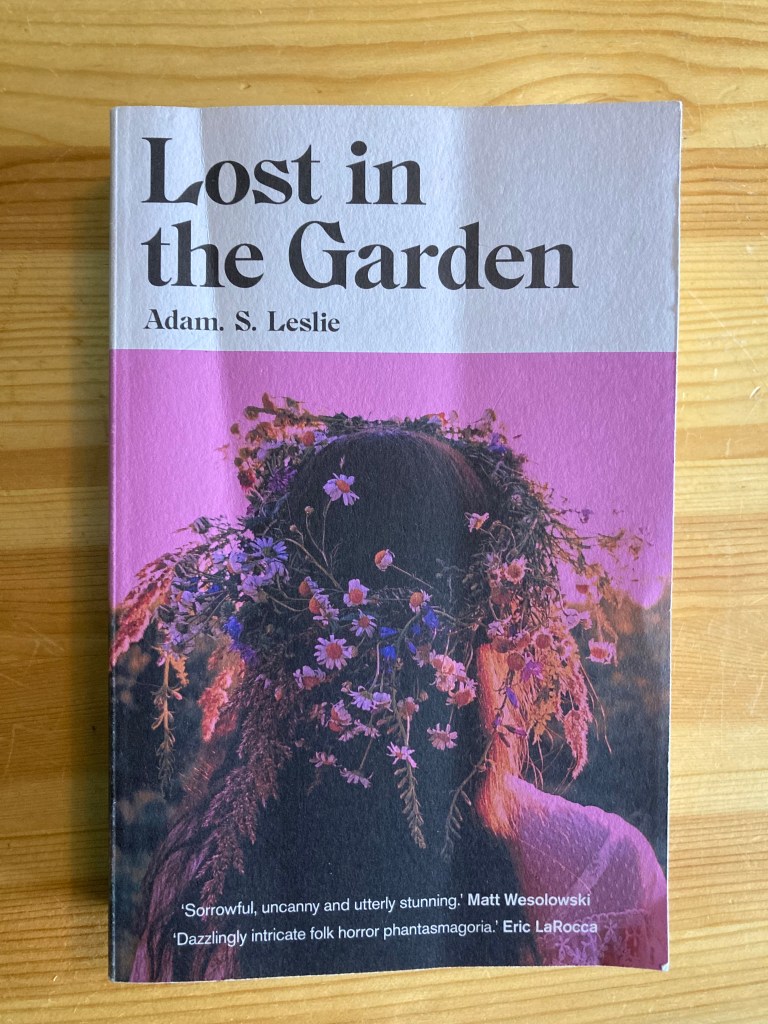
  • Lost in the Garden

    Adam S. Leslie, 2024 

    Edition read: Dead Ink Books, April – May 2025, 446 pages 

    Fiction – folk horror. Won a Nero Award for Best Fiction. 

    *Spoilers* 

    Three young women live in personal stases of varying degrees in a village in northern England where the dead meander and a six-year summer shows no sign of abating. This is the first interesting point (besides the dead roaming about and everyone seemingly just kind of…meh about it): a folk horror set in a warm, sunny, endless summer, inviting at least just a little bit of comparison to that most famous piece of work in the folk-horror oeuvre, The Wicker Man (we’ll come back to that later). 

    The title refers to the unnaturally ever-abundant vegetation created by the endless summer that these three female protagonists – Heather, Rachel and Antonia – inhabit. In this world, Leslie has a different take upon zombies; they are generally harmless until underestimated, at which point they close in, gang up and kill people with hard objects. No eating reported. 

    The descriptions of this eternal summer are rich without being saccharine (‘Very occasionally it was a dry heat, a soily heat smelling of bug carcasses and stones, but usually the air sweated as much as the people’), and rural scenes abound, with the action sticking to the countryside and villages.* In this garden, there are no old(er) people and no authority figures, although there does exist the accepted aphorism, ‘Don’t go to Almanby’. No one seems to know why; just going there is taboo. Plotwise, Heather is trying to find her boyfriend, Steven, who disappeared to – of course – Almanby around six months earlier, although a difficulty in keeping track of time is a recurring theme, getting pushed to extremes later on in the book, with one particularly atemporal slippage of reality. 

    Rachel needs to deliver a package – the contents of which she keeps a secret from Antonia and Heather – again, to Almanby! This is the start of the story proper. Roadtrip! 

    I started off quickly, then slowed down, finding the irreverence of Rachel and Heather a bit grating, then got back into it as the narrative drive picked up. Rachel clearly has something to hide, but we aren’t just let in on what. She receives mysterious, nonsensical transmissions via a portable radio. The unknowns, including an ever-elusive ice cream van, build up the mystery, driving the story via intrigue, and although the unanswered questions ultimately add to the feeling of a bad dream, these don’t all resolve as clearly as possible. For example, it’s implied that Antonia is a murderer, which doesn’t go anywhere, nor does it really seem to inform her character. Her love interest in (but seemingly never with) Heather also just fizzles away at the end, without any requisite epiphany. 

    Although it moves between the perspectives of each of the three main characters, it can sometimes be hard to remember the ‘whys’ in this novel; why did David hold them up? He is also being manipulated by Steven? What’s the deal with Rachel – is she addicted to something? At one point I wondered if Almanby was an analogy for addiction (‘it was the best feeling she’d ever experienced, and she never wanted it to stop, even as she knew it soon would’), but this isn’t developed and her motivation remains unclear. 

    Jumping back to that use of ‘folk horror’ and The Wicker Man – when they arrive in Almanby is when it really becomes clear that the normal rules of this universe have fallen aside and that something is off, although Leslie does a good job of maintaining the build-up and making it hard to place what. As suggested, a lot remains unexplained, which at times really adds to hazy feel, such as the farm building which turns into a looping maze, but this doesn’t deliver on all fronts. Is Heather struck by lightning towards the end? Is Steven trying to destroy Almanby? The theme of sacrifice also comes up, but not as a heavy-handed copy and paste of The Wicker Man. So, although the composition falls apart towards the end, the ending is still delivered with considerable interest, and does leave a satisfying chill. 

    Worth reading? Yes.

    Worth re-reading? Yes, although the strength of the writing carries the plot a bit.

    *These were pleasingly effective compared to another recent read, Benjamin Myer’s The Offing

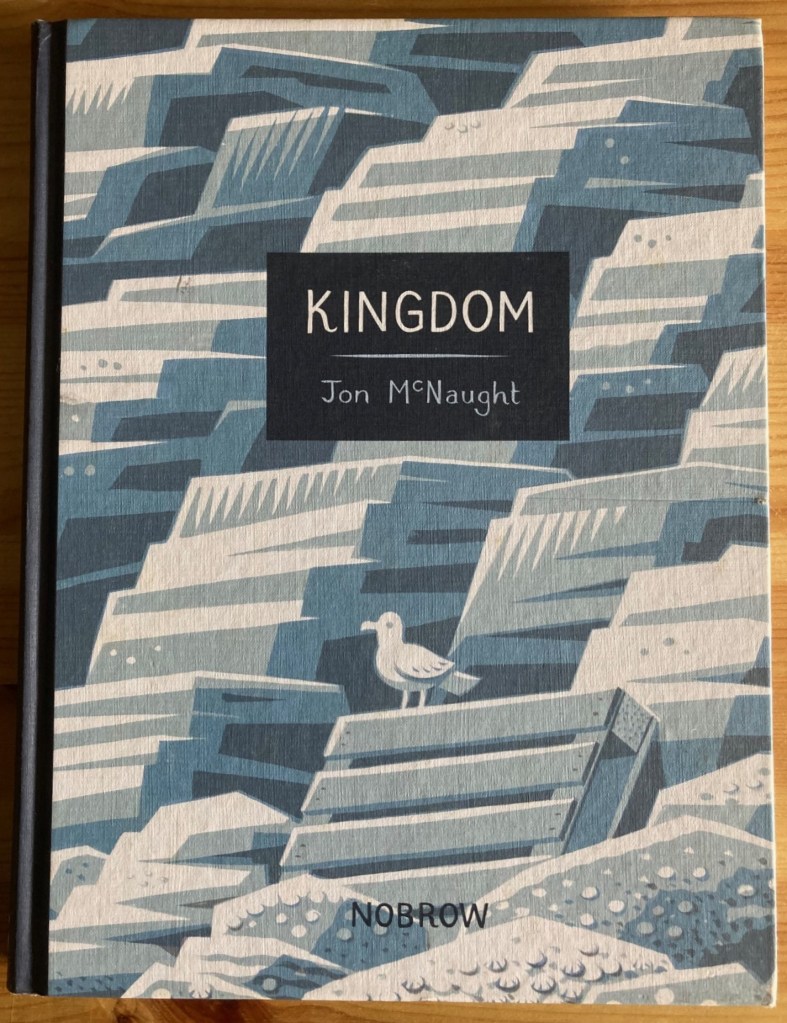
  • Kingdom

    Jon McNaught, 2018

    Read: January 2024

    Edition Read: NoBrow, pages unnumbered

    Graphic novel

    In contrast to my other recent graphic-novel readings (The Road, Safe Area Gorazde, Ducks), Kingdom is not about crimes against humanity. It is far gentler, a slice of life, specifically, of a family holiday. Nothing dramatic or traumatic takes place. An unnamed mum and her two children (Andrew and Suzie) – the former a teenager, the latter around 10 – go on holiday to a caravan park somewhere on the British coast. It is understated and the pacing measured – as such holidays can be. It is a poignant snapshot of the parts of holiday that are rote, mediocre, uninspiring, and enforced fun that turn out to be anything but. Even the nature that surrounds Andrew and Suzie, the two protagonists, also becomes the minutiae of their life on holiday.

    It is written in lots of very small panes, capturing a scene and all of its details (there are lots of onomatopoeias), shot by shot (up to 35 per page). The colour palettes are monochromatic hues of blues and reds, sometimes mixing together. There are relatively few words, and it takes several pages until someone talks.

    It has its melancholic moments; I got the impression that the shot of the mother and Suzie driving away from Great Aunt Lizzie’s house is probably the last time they will ever see her, and despite Andrew making a friend (who is maybe a local, or perhaps someone just like him – on holiday and bored), there is a telling scene where they scorn a group of children, around their age, having fun in the distance. Whereas Suzie is still young enough to be curious about the world, Andrew seems to be keeping it at arm’s length, generally preferring to spend time alone or playing videogames. The mother is generally depicted as trying to do something for her children; at no point does she ever get to do anything for herself.

    Although the whole point of the book is that not much happens, these memories, captured with all of their minute details, are the sort that will stay with the characters. How these children (and sometimes the Mum) relate to their environment is a big part of the story; the Mermaid’s Cave shows how memories can sometimes be better than the reality, but whereas Mum is disappointed about the reality when compared to her memory, Suzie likes it; and so the cycle continues. As such, Kingdom is about how we remember things. The caravan park that they stay at is called Kingdom Fields, but it is also memory that is a realm – a kingdom – in itself.

    Worth reading? Yes.

    Worth re-reading? Yes.

  • The Firm

    John Grisham, 1991 

    Read: April 2025 

    Edition read: Arrow 1991, 421 pages 

    Legal thriller

    Besides a nice view, slightly wonky drawers and Cornwall’s slowest TV, my holiday accommodation came with this book. It’s a legal thriller and using tell, don’t show (rather than the reverse), it succeeds in being a page turner. This keeps the pace up, a mark of success for a book about a law firm (and Grisham is not shy about the legal terminology). 

    Most of the story is told from the perspective of the protagonist Mitch McDeere. It switches to those of other characters to feed the reader information to smash that plotline out. This makes it a bit too easy a read; for example, there would have been more narrative tension if it wasn’t made explicit that McDeere’s house had been bugged. 

    It also reads as a certain amount of wish fulfilment, with Grisham accentuating the materialistic details; McDeere is a working-class boy (who was also quarterback!) who done good and now wants to drive a car that shows it. His wife, Abby, has great legs. His eventual accomplice, Tammy, has great breasts. The in-laws – who are the wrong type of materialistic – suck. This last point says a bit more than I think Grisham intended to; while masquerading as a takedown of these things – materialism, sexism and racism (on this last point, stereotypes abound), The Firm simultaneously accentuates them. 

    Returning to the issue of narrative tension, there a couple of things that left me scratching my head. The incriminating photos of McDeere with the prostitute never become of any significance. This would have made the story more dramatic in terms of Mitch’s and Abby’s relationship, but in the final paragraph this whole lapse of character – a moment of reckoning – is just dropped. Why does McDeere’s colleague, Lamar Quin, turn a blind eye when he spots his brother, Ray (ultimately allowing Mitch to incriminate him)? When Avery is killed off, it is reported via dialogue between two other characters, without the intimacy of being taken to the scene being granted. Given how much information The Firm does feed to the reader, it feels odd for this sense of distance to be deployed here. Only two of the five murders of former lawyers are delved into; is it realistic for a firm of brilliant, perceptive, high-flying lawyers to not look into the other three? Tammy also receives little in the way of resolution, although I felt that here, Grisham keeping her at arm’s length, rather than drawing her deeper into the narrative, did work, in that the theme of people cutting the ties that bind and reinventing themselves recurs. Likewise, when the stereotypes are left alone, The Firm does come across as a strong piece of Americana; motels, diners, roads, reinvention and losers abound. 

    There are a few other things that work better; the death of the third brother, Rusty, in Vietnam, is mentioned, as is Mitch’s and Ray’s mother, but both of these elements are kept peripheral. The closest the latter comes to entering the story is Mitch almost – but not quite – visiting her. This is one of the more interesting, literary aspects of the novel, with this relationship being shown rather than told, and this estrangement never being fully revealed. The end feels rushed, with the last third dropping the ‘legal’ from ‘legal thriller’. Little detail is given about the ultimate fate of the firm and the mob. Mitch gets his ending. Abby doesn’t (or rather, she gets Mitch’s ending and is apparently completely fine with it). They have loads of money, but it seems like they are limited in many other ways (they can never return home; McDeere, the dedicated lawyer, can never practise law again). Arguably this is more realistic and grittier than everything just working out and the hero getting to carry on as he was (the FBI aren’t depicted as angels, and in some ways, McDeere is their victim), but the closing line of ‘Let’s get drunk and make a baby’ reads like a somewhat Victorian idea of a happy ending. 

    Worth reading? It’s a tempting yes, because it’s a quick, easy read, but ultimately, no.  

    Worth re-reading? No.