Author: gregmbrooks

  • The Bloody Chamber

    Angela Carter, 1979 

    Vintage, 2006, 149 pages 

    Read 2011, re-read February–March 2026 

    Short stories/feminist literature/literary fiction 

    *Spoilers*

    I was going to introduce this collection of ten short stories as feminist rewritings of fairy tales. However, Helen Simpson’s introduction instantly states ‘The Bloody Chamber is often – wrongly – described as a group of traditional fairy tales given a subversive feminist twist.’ 

    Fine, I thought. Suit yourself. I won’t.  

    (Whispers) But actually, I will. Just a little bit.

    In The Bloody Chamber, fairy tales generally of the more macabre variety become the points of departure in Angela Carter’s process of writing new ones. In the eponymous first tale, a young French woman gets married to a murderous member of the nobility, only to be rescued by her mother. In The Tiger’s Bride, the protagonist is gambled away by her father to a man disguised as a big cat, in the end becoming a tiger herself. Puss-in-Boots is the story of a rake and his feline companion, who are only ever rewarded for their ways. The Erl-King is a sylvian story of possession and revenge. The Company of Wolves is a young girl taking on a wolf in a universe akin to The Northman, in which ‘Children do not stay young for long in this savage country.’ Wolf-Alice combines a vampire with a protagonist reared by wolves. Simpson is partially right in that these tales are evolutions rather than adaptations, but you can see the overlaps, as brief as they are. 

    Despite an almost-universal familiarity* with the stories that are used as launchpads (in respect to their providence, maybe they should be referred to as ‘tales’ rather than stories), it’s not always immediately apparent where these tales are going and what each element signifies. However, this sense of mystery, combined with Carter’s creativity, makes for compelling reading. This is a multilayered, densely symbolic and, despite its complexity, fun collection of short tales. Sometimes set in days of yore, sometimes rewritten into the twentieth century, most stories are from a female perspective, and that preserve of the short story, the ambiguous ending, recurs. Analysing all of them, and what I think they mean, would make this review 1) very long 2) something closer to academia (such as the Lacanian psychology in Wolf-Alice), but Carter writes creates the option of a close, deep read (and re-reads), or just marvelling at them in a less analytical, although not necessarily less appreciative, manner. Indeed, Carter really plumbs the content of these tales, with some of them based on the same origin story, two drawing from Beauty and the Beast and two (arguably three) from Little Red Riding Hood

    And if the ideas are bold, the writing matches it. Ian McEwan’s frontpage pull quote describes these as ‘Magnificent set pieces of fastidious sensuality’.** Ian, I just so happen to agree. Check this out: 

    And each stroke of his tongue ripped off skin after successive skin, all the skins of a life in the world, and left behind a nascent patina of shining hairs. My earrings turned back to water and trickled down my shoulders; I shrugged the drops off my beautiful fur. 

    Besides beauty, Carter’s continuation of these tales retains their darkness, with brutality present within each of the worlds created. However, here, the conservative bent of the traditional fairy tale is subverted into an embracing of danger. Yes, the protagonists must be vigilant, but also bold; they possess agency and learn to take action. 

    Worth reading? Yes. 

    Worth re-reading? Yes, particularly if you want to get into the subtext(s). 

    * At least in Europe. 

    **While studying this as a student, at some point I ended up just circling a single word of this front-cover quote: ‘sensuality’ (see the above photo). 

    You might like this if you enjoyed: 

    The Ocean at the End of the Lane by Neil Gaiman 

    American Gods by Neil Gaiman 

  • The Unconsoled

    Kazuo Ishiguro, 1995 

    Read: March–April 2026 

    Edition read: Faber and Faber, 2013, 535 pages 

    Fiction, Literary fiction, Post-modernism, Surrealism 

    *Spoilers* 

    A classical piano player, only ever referred to by his surname of ‘Ryder’, arrives in an unspecified, somewhat Germanic city, to give a performance. Between arrival and said performance, errands unfold one after the other into a chain of Kafka-esque side-missions, with the kind of incongruous logic only found in dreams. Time stretches, locations move about (the copy-editor must have had their own nightmares over this one), and otherwise repressed people bring their various crises and make unsolicited confessions to Ryder, in which they assume he is up to speed with whatever they are divulging. This assumed information – which we share Ryder’s ignorance and sometimes bemusement of – remains unexplained to both him and us as readers (for example, Ryder having his picture taken in front of The Sattler Building is hugely controversial – we just never get to know why).  

    This air of mystery is coupled with nearly every character’s excessively polite and precise and utterly verbose dialogue, which occasionally results in paragraphs several pages long. As such, the action and the plot unfold slowly. Although tense, it’s nowhere near ominous enough to be considered a thriller or horror novel (nor does it have the pay-off).   

    Rather, the novel lends itself to interpretation rather than explanation. Mine is that, in this dream-like state, the city is Ryder; maybe his self-perception, maybe his unconsciousness, and that he is trying to resolve some traumatic event – or maybe just overwhelming disappointment (one of the major themes) – with this trauma/disappointment simultaneously embodied and split into multiple characters, with each of these representing something that Ryder feels about himself. 

    A few examples: Stephan believes that his childhood inability to commit to his piano lessons caused his parents’ marriage to break down. And much as how Stephan’s parents ultimately never do watch him perform, nor do Ryder’s parents visit. Brodsky, once a conductor and now an alcoholic, is psychologically hung up on his wound (the nature of which is hinted at but never specified), with both of these issues estranging his wife. Despite a late resurgence, his conducting of the orchestra goes badly askew. Miss Collins, the said estranged wife, finally loses her patience, telling him ‘You’ll always go back to your one true love. To that wound!’ We are repeatedly told that the whole city – i.e., Ryder – and its reputation is dependent upon its ability to produce a genius musician, for which it turns to an outsider, Ryder, for help (unsuccessfully). Ryder, although clearly talented, is displaced even in his own dream/mind/sense of selfhood/sense of being, staying in a hotel (rather than at home) as he struggles to fulfil these expectations. 

    The variation upon this a couple of characters who it slowly becomes apparent are drawn from Ryder’s life and not just his mind, but his memory of which has been repressed. The most tragic of these are Sophie and Boris, to whom he appears respectively to be a husband and father figure. 

    Despite their symbolic prevalence, these characters are well-rounded and relatable. Taken together, the nature of these characters, with their combination of deep-seated unhappiness and repression, has a clear significance as symbolic elements. Despite the many unsolicited, detailed divulgences that Ryder is exposed to, nearly every character has an otherwise subdued, inhibited personality. Little in the way of obvious resolution is delivered and whatever has placed our protagonist in this position – or mental state – remains concealed. As such, The Unconsoled is a melancholic read; how we thwart the promises and expectations of our talent without even realising it, until only hindsight is left (‘Oh dear, Mr Ryder, I’m much too old to be standing at any crossroad […] If this had all happened even just seven or eight years ago […]This is hardly the time to be starting out with a whole new set of hopes and fears and dream.’) Ryder’s parents never arrive; Stephan recites his piece as support act, but the whole point, that his parents witness his talent, is thwarted; Brodsky’s conducting of the orchestra falls apart; Ryder’s performance never happens. Yes, this is a Kazuo Ishiguro novel. 

    If you enjoyed, or rather, enjoyed how sad Never Let Me GoThe Remains of The Day or Nocturnes made you, you’ll like remaining unconsoled to this one too. 

    Worth reading? Yes. Don’t be daunted by its length or its deliberate wordiness, it’s a compelling read. 

     Worth re-reading? Yes. This could even illuminate some interesting foreshadowing. 

    You might like this if you enjoyed: 

    The Third Policeman by Flann O’Brien 

    A New Name: Septology VI-VII by Jon Fosse

    Never Let Me Go by Kazuo Ishiguro 

    The Remains of The Day by Kazuo Ishiguro

    Nocturnes by Kazuo Ishiguro

  • The Second World War 

    Antony Beevor 

    950 pages  

    Published 2012 

    Weidenfeld & Nicolson 

    Read from October 2025 – March 2026 

    History 

    Some historians focus on the minutiae of history: what is the history of the dice? Why did the shape of ringpulls on tinned food change? What role did shoelaces play in the Mongol Empire? Not Antony Beevor.  

    ‘Antony, what are you writing about next?’ 

    ‘The Second World War.’ 

    ‘Which bit-?’ 

     ‘ALL OF IT.’ 

    In reviewing non-fiction, and history books in particular, it can be tempting to list all of the information gleaned, and it is testament to the quality of this book that in writing this review it was tempting to list many, many things. Initially daunted by its length, once I got going the 950 pages were a pleasure to read. Narrative-driven but analytically insightful, The Second World War is well-paced and conveys the overall story of World War Two in a balanced manner. Despite being so long, there is a slight trade-off between scope and depth, with scope winning out. This isn’t to say that Beevor doesn’t have an eye for detail; he knows what to include while keeping the story moving, and given how long it would have been otherwise, this is a minor and sensible compromise and remains a highly educational read.* Beevor also makes just the right amount of space for the human element of the war and the interest that this generates is a good starting point for further, more specific, reading.   

    The national stories of the Second World War obviously vary, but Beevor – a British historian – makes efforts to cover all theatres. Besides the well-known events (from a British perspective) – the Blitzkrieg (which Beevor contends was improvised in the moment and on the ground rather than premeditated), the Battle of Britain, the Blitz, the North Africa campaign, the Eastern Front, D-Day – it covers lesser-known domains, such as the Winter War, the Italian invasion of Greece and the German invasion of the Balkans, and in particular, the Sino-Japanese theatre. 

    Beevor shows a particular focus, unsurprisingly, on military matters – particularly the distribution and movement of forces by commanders – and analysis of leaders, which in this war featured a lot of big personalities. Beevor doesn’t delve into the great man of history theory directly, but he does make it clear how important these particular people were, from Hitler’s uncompromising vision and interfering manner, to Stalin’s paranoia and ruthless obstinacy. I was also surprised at how badly world leaders, leaders-in-exile, military commanders and resistance-movement leaders, ostensibly on the same side, seemed to get along most of the time and how much politicking they engaged in. Many had post-war visions of their country or empire in mind and wanted to make sure that, come the cessation of hostilities, they would either be in charge or be able to pre-empt any civil war. 

    As with his analysis of citizens being caught between systems, Beevor also dispels the ‘good solider’ myth, and how it was more a case of people trying to survive the commanded action (whether combatant or civilian). His criticism is also balanced without producing any false equivalences. In particular, he looks at how British and American ‘targeted’ bombing was so inaccurate that it was more fitting to think of it as area bombing, and criticises this as morally indefensible. 

    Besides Beevor’s own analysis, his insights enable self-made analysis. One example, I already had some understanding of how poor Hitler was as a war-time leader, but didn’t appreciate the extent to which he interfered in command, believed in his own propaganda and refused to even consider strategic withdrawals. Both he and Stalin maintained hold of their subordinates through divide and rule in order to have direct control over all parts of their armed forces. 

    There are a couple of minor niggles: the front cover states that the war left no life untouched, but Latin America is barely mentioned and Sub-Saharan Africa is similarly limited. It would have been nice to have more on the end of the fighting in Italy, and overall, although it includes some post-war analysis, it ends a bit suddenly, although it’s fair to counter that a line had to be drawn somewhere as World War Two became the Cold War (‘Greece was another example of the Second World War merging into a latent third world war’). One point I would have liked Beevor to share his thoughts upon was if Hitler hadn’t believed in labensraum and the triumph of the will so stubbornly, and had been a more pragmatic military commander, would the Axis powers have won? There are several maps, but even so, a few more would have made it much easier to understand the progress of battles and how frontlines moved. Likewise, it would be useful to know what a division, battalion, army etc. consisted of, given that these varied from country to country. 

    However, befitting the title, Beevor does a good job of tying it all together, stating:  

    The Second World War, with its global ramifications, was the greatest man-made disaster in history. 

    Worth reading? Yes.

    Worth re-reading? Yes, although an alternative would be to read around the subjects that you find particularly interesting.

    *Winston Churchill’s history of the Second World War consists of six volumes if you really want what I assume to be a particularly splenetic account of the conflict. 

    ** It was interesting to contrast Beevor’s hyper-detailed Stalingrad with The Second World War and how Germany’s Russia campaign fitted into the wider story of the Second World War, particularly how it influenced the fighting in China and North Africa. 

  • The Dark Side of the Moon: The Making of the Pink Floyd Masterpiece 

    John Harris, 2005 

    Harper Perennial, 2006 

    180 pages 

    Re-read March 2026 

    Memoir/Biography 

    A partial biography of Pink Floyd with a focus on The Dark Side of the Moon. Starting with their formative years and the importance of Syd Barrett, it covers the band from inception through to the writing and recording of The Dark Side of the Moon, touching upon their subsequent efforts, their ugly fracturing and eventual dissolution. 

    Widely considered to be one of the best albums ever, it could be easy for the cultural cache of The Dark Side of the Moon to be misattributed to any telling of its story. Coupled with this is that music journalists tend to be, at least in their nascent stage, fans. However, a free pass for Messrs. Water and Gilmour et al. this is not; although enthusiastic enough, Harris still applies critical insight, with the Syd Barrett era generally coming across as inessential (‘“Corporal Clegg”’ may have been a rather directionless burlesque about an English war hero who “had a wooden leg”, an impression only furthered by a deeply irritating passage played on kazoos’). 

    Given the cohesion and sophistication of The Dark Side of the Moon, it’s also interesting how much Pink Floyd were still learning by trial and error on their eighth album. Harris listens around a lot, not only placing this album in its context after the widely forgotten Obscured by Clouds, but also to live recordings, giving an idea of how this album developed. He digs into the details of the recording process without it becoming a full technical rundown. It’s also interesting to learn how much they gigged during the writing of the album, including on US tours. What’s less surprising is the personalities involved. Whilst making it clear that this album was very much the creation of four people, Harris inevitably focuses on Roger Waters, who comes across as a dominating, oft-cantankerous figure. 

    It’s inevitable that reading about a band or album will recontextualise it, even if only slightly, through the shedding of mystique. Whether you want to know about the nuts and bolts of this seamless, wonderfully creative album is up to you, but if you do (and if the band you’re in starts playing different tunes), this is a great read. 

    Worth reading? Yes. 

    Worth re-reading? If you are a particularly big fan of Pink Floyd, yes. 

  • Homage to Catalonia

    George Orwell, 1938 

    Re-read December 2024–January 2025* 

    269 pages 

    Vintage Classics, 2021

    Non-fiction, Memoir

    Bill Bryson once described George Orwell as a middle-class milksop who changed his name for street cred (maybe not word-for-word, but it’s something along those lines).** Bill: I rate you, I like you, and oh how we’ve laughed, but here, you’re wrong. Originally travelling to Spain to report on its civil war, within a week Orwell had joined the republican forces to fight Franco’s fascist forces, considering it ‘the only conceivable thing to do’. When it came to standing up for democratic ideals, Orwell walked the walk as much as he, er, wrote the words, eventually taking a bullet in the neck for his troubles. 

    Homage to Catalonia is Orwell’s resulting, retrospective account of his time in Spain from late 1936 to the summer of 1937, commencing in media res in December 1936 when Orwell joined the POUM (Partido Obrero de Unificación Marxista – the Worker’s Party of Marxist Unification) – a socialist, anti-Stalinist militia. It covers his time fighting in trenches in various spots around Aragon, the rupture between anarchist/socialist and Stalinist factions, the internecine street fighting that erupted while he was ‘on leave’ in Barcelona and the following atmosphere of suspicion and denunciation.   

    There are two key components – Orwell’s observations and analysis of revolutionary politics and society, and descriptions of war. These elements often overlap, although in this edition the two chapters originally dedicated to purely political analysis have been turned into appendixes. Orwell manages the romantic clichés of revolution carefully, avoiding idealisation. Towns are described as shabby and in disrepair, there is rationing and shortages, and this is before he even reaches the trenches. Once he does arrive on the frontlines (‘the gaunt trains full of shabby soldiers creeping to the front, the grey war-stricken towns further up the line, the muddy, ice-cold trenches in the mountain’), he is surrounded by used food tins and excrement, with the biggest challenges not being fascist bullets and mortars, but the mud, the lice, finding firewood to stay warm in the mountains of Aragon during winter, and getting hold of a working weapon: 

    I remember the desolate look of everything, the morasses of mud, the weeping of poplar trees, the yellow water in the trench-bottoms; and men’s exhausted faces, unshaven, streaked with mud and blackened to the eye with smoke. 

    However, while Orwell does cover how the militias were disorganised, barely armed and sometimes a bit rudderless, he also affirms their importance in holding the line while the regular army was brought up to scratch, and how, for a brief window of time, the revolution achieved its aim of people feeling to be and acting as equals, both in the trenches and in civilian life.  

    He writes on behalf of socialism, but not blindly so: the journalist in him is ever present.*** He describes in detail how the fight against Franco’s fascists is undermined by left-wing infighting (or rather, the betrayal of the cause by Stalinist elements), and he makes his loathing of Stalin clear. He also expresses how he wishes he could have been of more use to his chosen cause somehow, and that he could’ve prevented it from becoming a losing battle. This is paired with a clear idealism: 

     If you had asked me why I had joined the militia I should have answered: “To fight against Fascism”, and if you had asked me what I was fighting for, I should have answered: “Common decency”. 

    Although never a particularly ornate writer even in his fiction, here Orwell writes in an even more straightforward manner, and through it is able to both discuss Spanish politics and make apparent the muddle of war. This is not to say there are no great descriptive moments, such as when he describes a night-time raid on a fascist trench. Being a retrospective account, Orwell often makes it clear how vivid these memories – both good and bad – remained to him and expresses an appreciation for their intensity.   

    Worth reading? Yes – a fitting tribute to those who fought against Franco. 

    Worth re-reading? Yes – ninety years on, it’s unfortunate that the end once again feels prescient: 

    [S]outhern England, probably the sleekest landscape in the world. It is difficult when you pass that way […] to believe that anything is really happening anywhere. Earthquakes in Japan, famines in China, revolutions in Mexico? Don’t worry, the milk will still be on the doorstep tomorrow morning, the New Statesman will come out on Friday […] Down here it was still the England I had known in my childhood […] all sleeping the deep, deep sleep of England, from which I sometimes fear that we shall never wake till we are jerked out of it by the roar of bombs. 

    *A watch of Ken Loach’s Land and Freedom, a close film adaptation of Homage to Catalonia, motivated me to re-read this from the summer of 2013. 

    **Notes From a Small Island, I think. 

    *** For anyone in doubt: in 1946, Orwell wrote ‘Every line of serious work that I have written since 1936 has been written, directly or indirectly against totalitarianism and for democratic Socialism’. 

  • Back soon: gone readin’

    Ever since I relocated my to-read book pile from the shelf over my bed to a table in another room, I have experienced an interesting dichotomy: whilst sleeping easier knowing that my skull won’t be crushed by the shelf suddenly giving way and the resulting downpour of books, this has allowed the pile to start resembling the Tower of Babel and I fear whatever god(s) may be will get the wrong idea. All I have to ward this threat off is A) a negative review of the Bible, which brings us back to the beginning of the problem, or B), read the books I already have instead of buying more.

    As such, there will be a bit of a break from weekly reviews, but barring the aforementioned smiting, look out for my glorious return, which, specifically, will consistent of the following reviews:

    Homage to Catalonia – George Orwell

    The Second World War – Antony Beevor

    Beirut 1958 – Bruce Riedel

    The Bloody Chamber – Angela Carter

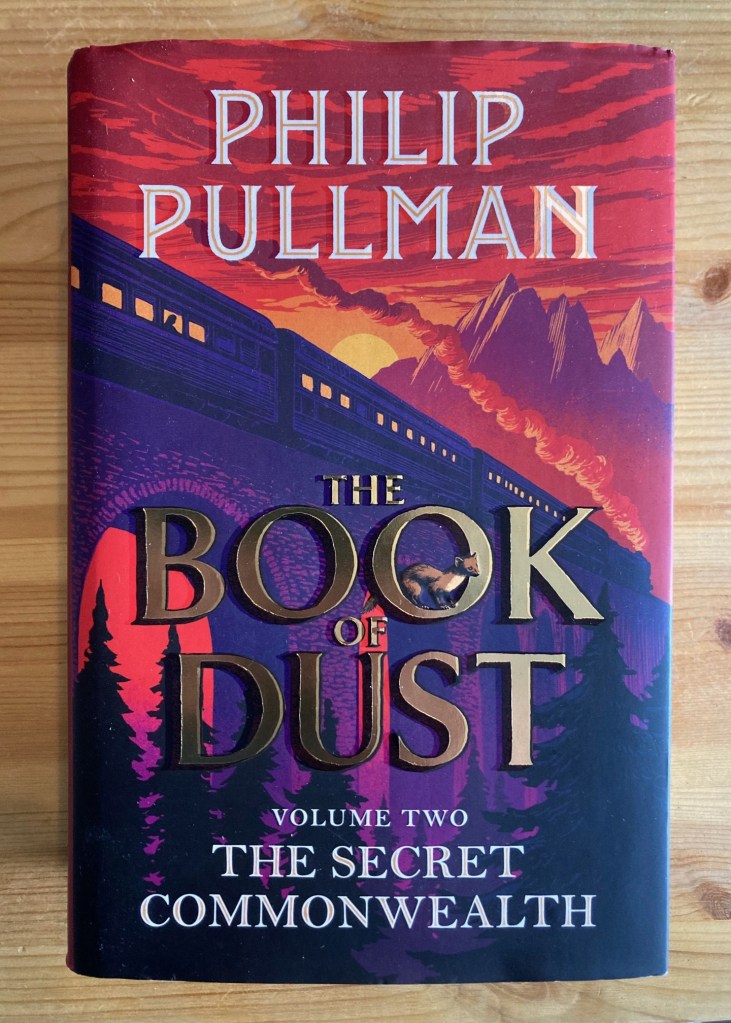
    The Secret Commonwealth – Philip Pullman

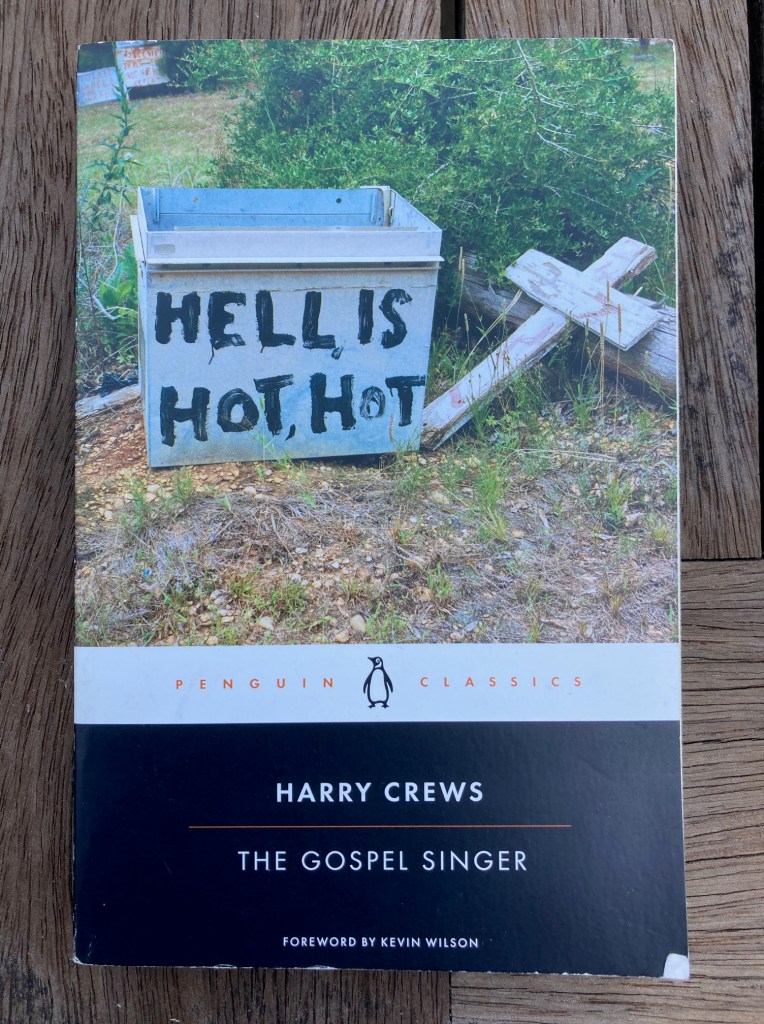
    The Gospel Singer – Harry Crews

    Half of a Yellow Sun – Chimamanda Ngozi Adiche

    Birds, Beasts and Relatives – Gerald Durrell

    These Darkening Days – Benjamin Myers

    Young Skins – Colin Farrel

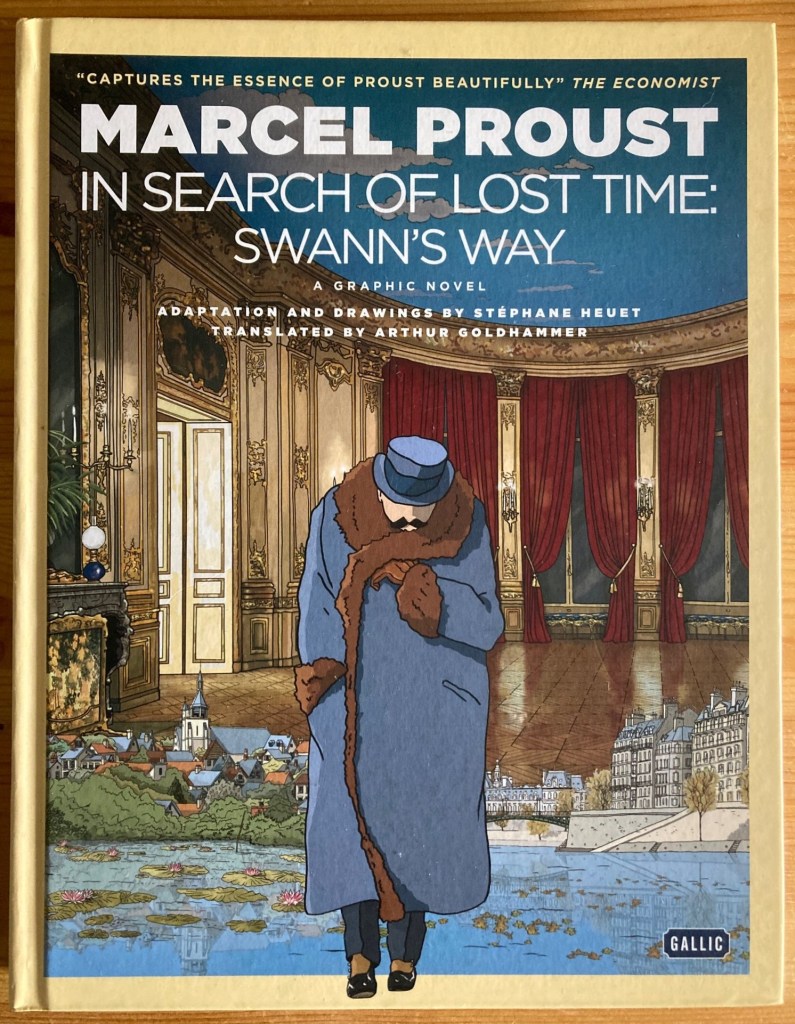
    In Search of Lost Time – Marcel Proust (graphic-novel adaption)

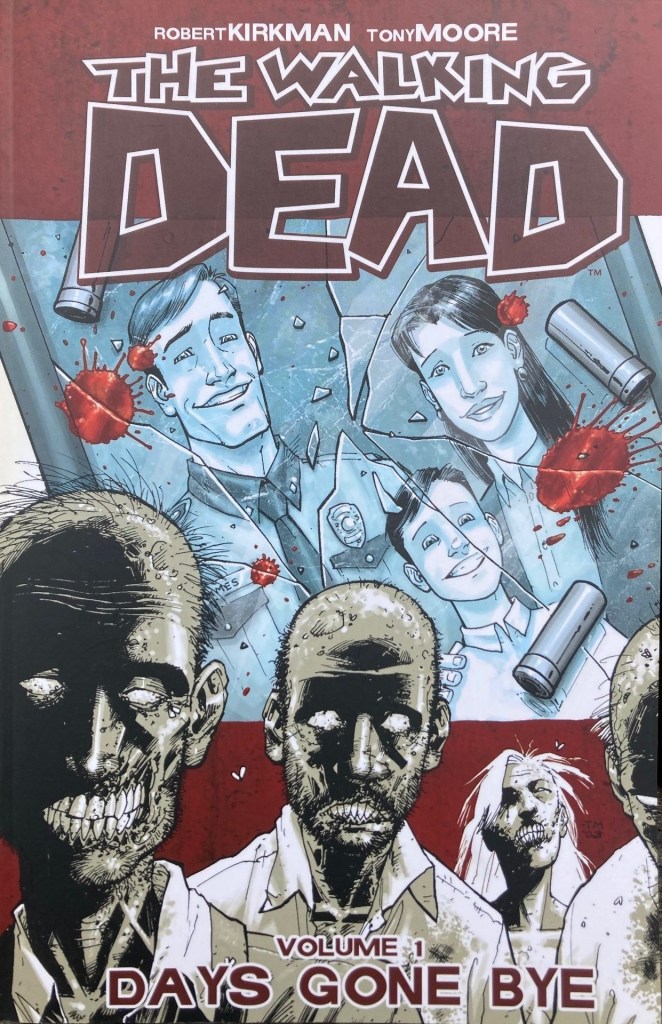
    The Walking Dead – Robert Kirkman

    Black Hole – Charles Burns

    And a bit further down the line:

    Studying the Novel – Jeremy Hawthorn

    The Seven Basic Plots – Christopher Booker

    The Iron Wall – Avi Shlaim

    Hope It All Works Out! – Reza Farazmand

    Happy reading in the meanwhile.

  • Tuff

    Paul Beatty, 1998 

    One World, 320 pages 

    Read and re-read February 2024 

    Satire 

    Winston ‘Tuffy’ Foshay and his gang want to make money over the summer. With this end in mind, Tuffy decides to run for office – or, this is the book as the blurb would have it. This high-office caper is actually confined to the last third of the book, rather than actually playing a prominent part, and seems as unfocused as the other two-thirds of the book.  

    This lack of focus is indicative of the book as a whole, with the plot seeming like a distraction from Tuffy’s misadventures on the streets, Beatty’s rapid-fire satire and the cultural commentary. What the latter is actually trying to express is unclear, even with a second read. Based on his other, more recent books, Beatty does seem like he has a lot to say about the exclusionary nature of American politics,* but the lack of focus makes it unclear whether this is even the point of the book. Tuffy and his gang have moments of insight, but overall run a nihilistic course and, being ambivalent about nearly everything except for money and weed, it’s hard to invest in them as characters either.  (Tuffy’s other interest – film – seems a shade too incongruous.) Maybe that’s the point, that the characters have no interest in belonging, akin to a modern day The Outsider, but if there are no stakes it’s hard to care as a reader either. 

    Worth reading? No 

    Worth re-reading? No 

    *In particular, The Sellout

  • Sword Song

    Rosemary Sutcliff, 1997 

    Red Fox Classics, 2001 

    272 pages 

    Read December 2023 

    Historical fiction, YA fiction 

    *Spoilers* 

    Bjarni, exiled from his settlement for five years for breaking an oath (and only indirectly for committing manslaughter), proceeds to make his way through the Viking world as a mercenary and sailor. What with being a solid Norse lad, this entails the expected abundance of seafaring and feuds. However, Sword Song was not entirely the picture of Viking life that I expected; Scandinavia is eschewed in favour of Viking settlements in the Celtic nations, and the non-martial aspects of Viking life, whilst not foregrounded, are given more space than I anticipated. 

    The slightly old-timey dialogue (‘Is it well with the bairn?’) and the use of placenames of yesterday (‘the Outer Isles’ for the Outer Hebrides and ‘Sutherland’ for the Highlands) lends it a feel of a time before lore, when homes were considered in a more fluid manner and certainly before the concept of a united kingdom. It is not always initially exactly clear where the story is taking place and I enjoyed this defamiliarisation, placing us in our protagonist’s calf-skin boots through five years of adventuring. 

    Its emphasis on adventure makes it a YA book (I mean, look at that front cover), although, while the violence is not gratuitous, nor is it shirked from. In Bjarni’s universe, whilst not a given, death by violent means is readily accepted. In other ways, the richness of details, especially on nature and boats, makes it a gratifying read as an adult: ‘Just where moorland fell away to machair a stream came down from the higher ground, pushing its way through a narrow glen suddenly and unexpectedly choked with trees-a-tangle, birch and rowan and willow and thorn’. This appeal to more considered tastes tempers the pace and prevents it from devolving into the monotony of just being sword fight after sword fight, which, conversely, is what I found hard work when I first bought this when I was 11 or 12 (RRP: £4.99) and sword fighting was a lot more important to me than bucolic vistas. Upon picking it up (20 years-plus later) I half-expected to DNF it again. Instead, I very much found the opposite: the break-up of the sword fighting is what helps make it a compelling read. The abundant descriptions of nature and place-setting that Sutcliff incorporates into her descriptions, without being overwrought, emphasises how these were peoples of the land and of the sea, and in a way, nation builders.  

    It feels well-researched, or at the least, convincingly researched, and both Norse and Christian mythology are touched upon, although they are not central to Bjarni’s worldview. These religions coexist, but primitive, brutal and tribalistic traditions abound in all wheres; feuds, funerals, how animals are treated, going into battle. With all of that said, the underlying zeitgeist is of an incremental shift from paganism to Christianity – the bigger picture paired with the individual experiences of Bjarni. Sutcliff also doesn’t shy away from incoporating the Vikings’ penchant for taking thralls – or slaves – and how some people did not have a chance to make their own way through the world. 

    I would have liked it if there had been a bit more introspection on Bjarni’s part: earlier on in the book ‘he was well enough content, though still there was an ache in him somewhere like the ache of an old wound when the wind is from the east’, but this is pretty much it. He seems to take five years of what seems to be regularly scheduled drama in stride, and is apparently content to wander with rarely a trace of homesickness.  

    Towards the end, he reflects upon how his people call home wherever they lay their head: 

    And suddenly, he was realising something that he had not realised before; that while he come of a people who could uproot easily, whose home was as much the sea as the land [Anghared] was of another kind […] She was flung out into a strange world that held nothing familiar, a cold place; he could feel the cold in her. 

    But there is little talk of how this strange, cold world has affected him. How has he changed by the end? I’ve not read any of Sutcliff’s other books, but as this was published post-humously (I don’t know if that included any of the writing and editing process), I suspect that this may have contributed to this slight sense of underdevelopment. 

    Worth reading? Yes. 

    Worth re-reading? Yes. 

  • Grey Skies, Green Waves

    Tom Anderson

    Read: October 2025, re-read December 2025–January 2026 

    Edition read: Summersdale Publishers, 2010, 270 pages 

    Travel writing 

    Living in southeast England, friends, family and well-wishers in general (you’d be surprised) are often alarmed when I mention that you can surf in the British Isles. Isn’t it cold? they ask. Yes, I say. Bring a wetsuit. Embrace the pain. The truth of the matter is that there is a lot of surf to be had; it’s just very much a geography-determined past-time. However, wherever you do go to catch a wave, they will be right about one thing: it will be cold. 

    As such – although only partially for this reason – surfing in the British Isles is sometimes seen as the poor cousin of what’s to be had internationally. And thus, the premise of Grey Skies, Green Waves is partially set up: our narrator and author, Tom Anderson, has come to realise that he doesn’t really like surfing in the British Isles anymore, given how much warmer, sunnier and, er, wavier, the rest of world is. He has fallen into a slump of surfing locally only half-heartedly. 

    The other part of the premise – and actually, given that Anderon grew up with the niche but all-consuming hobby of surfing, the more important part – is that he has hit a slump of entering surf competitions, only to drastically underperform. He sets out to remedy this case of ‘I don’t like the things I use to’ by taking more opportunities to surf in more domestic locales, and herein he accounts several surfing trips around the British Isles, extending from south to north Wales (including a secret spot in Cardiff), Devon, Cornwall, John O’Groats, the Outer Hebrides, the River Severn and County Claire. 

    Anderson is clearly a Good Surfer (surfing triple overheaders near John O’Groats is not for beginners, nor for improvers), and at points he captures the various sensations of being in the water vividly (‘A thick slop of heavy, cold, dark water is the surfing equivalent onto several feet of powder on a snowboard, or a big, smooth tarmac slope to a skater […] To bury your board onto its edge and then throw all your weight through an arcing turn, knowing the water below will bear everything you throw at it, it a feeling of at-oneness with the ocean that rivals any tube ride.’) As a surfer’s lexicon will attest, a wave is not just a wave: it has speed, height, depth, shape, direction and length. Anderson does this well, although certain passages merit a bit of secondary reading (for example, what is a ‘wedge’?). It is at its most engaging when describing being in the water in good conditions, and the more enthused about that particular session he is, the better that Anderson writes about it. As the book goes on, the stoke improves., and as such, the last quarter of the book is the best. 

    The other element of this book is back on dry (well, damp) land, capturing the ennui that accompanies not just surfing, but many outdoor pursuits, in the British Isles: early (cold) mornings, waiting in (cold) carparks for the right conditions to materialise (if they do), drinking away (cold) afternoons in pubs, disappointing competition results and late (cold) night drives home. Whilst overall I appreciate the inclusion of this other side of surfing, there were a few non-surfing sections that did not exactly make for compelling reading, such as the passage where he retells someone else’s story about accidentally trapping someone in an automatically cleaning French toilet. 

    It is written in the first person, which while fitting for a piece of travel writing, could have included fewer conversations recounted word for word via direct speech. Although sometimes this does place you in the moment, at other times it could have been a bit terser and not lost anything. Sharing the same past-time, it would be remiss not to mention William Finnegan’s Barbarian Days as a simultaneously accompanying and contrasting read, but given their different focus. 

    Worth reading? Yes – persevere through the discouraging sections. 

    Worth re-reading? Yes, for the passages in the water in particular. 

  • The Forty-Year War in Afghanistan

    Tariq Ali, 2021

    Edition read: Verso, 2021, 244 pages

    Non-fiction

    Read: October–November 2025

    The Forty-Year War in Afghanistan is a collection of twenty-six essays (and one exchange of letters) on the various occupations of Afghanistan, penned by the left-wing journalist Tariq Ali. It dates from 1980–2021, critiquing the Soviet occupation, the Afghanistan–Pakistan–US relationship (as well as the involvement of China and Saudi Arabia), through to the NATO withdrawal and the fall of Kabul to the Taliban. 

    Despite its disastrous ending, the invasion and occupation of Afghanistan is widely considered to have been a justified war (certainly compared to the invasion of Iraq). Ali gives this outlook short shrift, arguing that the NATO occupation repeated the mistakes of the Soviet one, such as installing unpopular puppet rulers (indeed, the subtitle is A Chronicle Foretold). 

    Looking at the occupation of Afghanistan in retrospect, and how badly it was managed and ended (and what life is now like for Afghans), it’s somewhat hard to argue that Ali doesn’t have prescient points to make. With hindsight proving him accurate on several matters, he regularly refers to his detractors’ contemporaneous criticisms that he is a cynic with a dark sense of humour. 

    He writes eloquently and his arguments are sophisticated. Because sophistication necessitates complexity, I would advise reading these commentaries one at a time, rather than treating this as a whole book: they’re not always the easiest pieces to read and digest, and being a series of essays, it’s not as comprehensive as a history book. There is plenty to learn, just not always in a straightforward format, and the bias is obvious (although I’m sure Ali would argue that these are just the facts). 

    However, a lot of the strength of his argument is drawn from how badly the occupation was managed (which he primarily believes was due to the corruption of the United States’ choice of new Afghan leadership and the failure to address elements within Pakistan and Saudi Arabia that supported the Taliban). This is slightly different to whether Afghanistan should have been invaded post-9/11, and there is a distinction to be made between ‘Was it justified?’ and ‘Was it well handled?’. If the occupation of Afghanistan had been successful (i.e., led to a reconstructed nation), would the invasion of it have then been justified? 

    As such, I wasn’t fully convinced by Ali’s argument that Afghanistan shouldn’t have been invaded post-9/11. He argues that Bin Laden should have been arrested and that the Taliban were ready to hand him over to the US: 

    It need hardly be added that the bombardment and occupation of Afghanistan has been a disastrous – and predictable – failure in capturing the perpetrators of 9/11. This could only have been the result of effective police work; not of international war and military occupation […] According to the official 9/11 Commission report, Mullah Omar’s initial response to Washington’s demands that Osama bin Laden be handed over and al-Qaeda deprived of a safe haven was ‘not negative’ […] but while the Mullah was playing for time, the White House closed down negotiations. It required a swift war of revenge. Afghanistan had been dominated the first port of call in the ‘global war on terror’, with Iraq already the Administrations’ first target […] Predictably, it only gave al-Qaeda leader the change to vanish into the hills. 

    My doubts come down to whether the Taliban would have actually done so, on which there are a myriad of conflicting sources. In The 9/11 Wars, author Jason Burke states that this was never going to happen. 

    I was also dubious about his argument that ‘What is really required in the region is an American/NATO exit strategy from Afghanistan, which should entail a regional solution involving Pakistan, Iran, India and Russia. These four states could guarantee a national government and massive social reconstruction in the at country.’ Given his own criticisms of Pakistan’s vested interests in its neighbour, I doubt that this measure would have led to a successful reconstruction. 

    Ali did, however, make me challenge my assumption that if Iraq hadn’t been invaded, the invasion of Afghanistan would have been successful. He argues that this occupation was mismanaged from the outset, criticising NATO’s selection of new, incompetent, corrupt leaders for Afghanistan, Hamid Karzai in particular.  

    While reading this, I tried to keep in mind whether I was reviewing a book or reviewing the justification and success of the Afghan war. Although not taken in by all of its arguments, Ali does ultimately make a convincing argument that the invasion was a misadventure and that the quality of lives for Afghans – perhaps the most important metric of the success of the invasion – has only gotten worse. Reading this in 2025, it is a saddening fait accompli

    Worth reading? Yes. Ali has a fairly rare opinion on the matter and it is interesting to read his arguments, whether you ultimately agree with them or or not.

    Worth re-reading? Yes, due to how detailed it is.